
By BlueSky Roofing & Siding Solutions | Serving Essex County, NJ | (201) 686-1059
Quick Answer: A chimney cap is one of the cheapest parts of a chimney system to replace and one of the most expensive to ignore. If yours is rusted through, missing entirely, or you’ve heard scratching in the flue, replacement typically runs $150 to $750 depending on material and flue size — compared to thousands of dollars in water, animal, or fire-related damage a failed or missing cap can eventually cause. Stainless steel and copper caps hold up far better than galvanized steel in New Jersey’s freeze-thaw winters, and most Nutley homes with original 1920s–1950s masonry chimneys are now due for at least their second or third cap replacement.
It’s the smallest part of the chimney and the easiest to forget about — until a rainstorm sends water straight down the flue, or you hear something moving around inside the chimney at two in the morning. Nutley’s housing stock leans heavily on Colonials, Capes, and Tudor-style homes built between the 1920s and 1950s, nearly all of them with brick masonry chimneys that were originally capped with a simple galvanized cover decades ago. Most of those original caps have already failed once, and a good number of homes are on borrowed time with a second or third cap that’s rusting through right now.
A chimney cap looks like a minor accessory, but it’s doing several jobs at once: keeping rain and snow out of the flue, stopping birds, squirrels, and raccoons from moving in, catching sparks before they land on the roof, and reducing the downdrafts that push smoke back into the house. When it fails, the damage doesn’t happen where you can see it — it happens inside the flue liner, the smoke chamber, and the surrounding masonry, often for months before symptoms show up in the house.
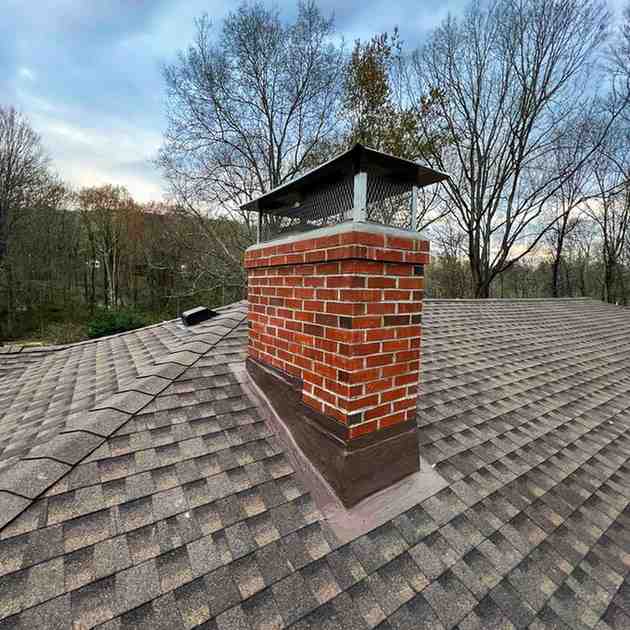
Why Chimney Caps Fail Faster on Nutley’s Older Homes
Most chimneys in Nutley’s established neighborhoods — around Kingsland Manor, along Franklin Avenue, and throughout the borough’s classic residential blocks — are original brick masonry structures with a metal cap added sometime after initial construction, then likely replaced once already as the first cap corroded. Standard galvanized steel caps, which were the default option for decades, typically only last 8 to 12 years in New Jersey’s climate before rust perforates the metal and lets water back in. Add in tree cover from mature street trees common throughout Nutley, and caps also take more physical wear from falling branches and debris than they would on a more open lot.
Homes with additions or renovated fireplaces sometimes have mismatched or improperly sized caps installed during unrelated work, which is worth checking even if the cap looks intact — an ill-fitting cap can let water in around the edges just as easily as a rusted-through one.
What a Chimney Cap Actually Protects Against
- Water intrusion: An open flue is a direct path for rain and snowmelt straight down into the smoke chamber and firebox, where moisture accelerates rusting of the damper and cracking of the flue liner.
- Animal entry: Chimneys without a cap are one of the most common nesting spots for squirrels, raccoons, and birds looking for a warm, sheltered space — and removing an established nest safely often costs more than the cap itself would have.
- Spark control: The mesh screen on a cap acts as a spark arrestor, catching embers before they can land on a roof or nearby dry leaves — a meaningful fire-safety feature, especially on homes with wood shake or aging asphalt roofing.
- Downdraft reduction: A properly designed cap reduces wind-driven downdrafts that can push smoke back into the living room instead of up and out of the flue.
- Debris blockage: Leaves, twigs, and nesting material can build up inside an uncapped flue over a single season, creating a blockage that forces smoke and carbon monoxide back into the house when the fireplace is used.
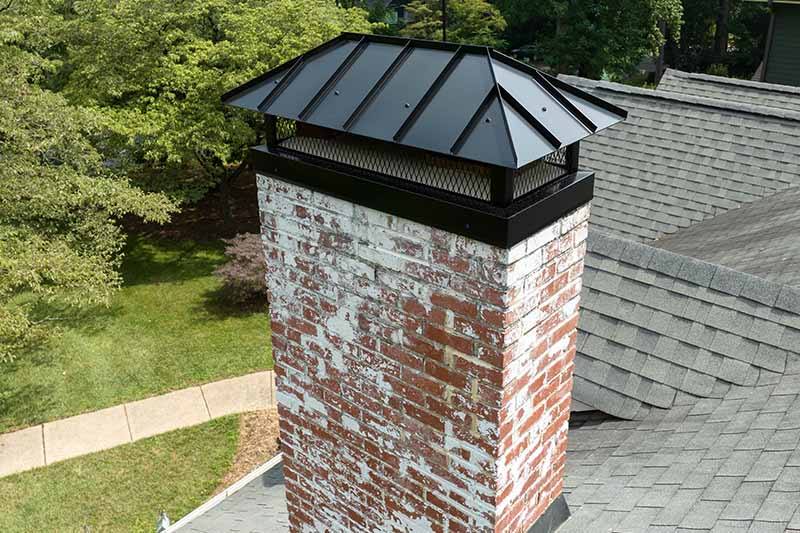
7 Signs You Need a New Chimney Cap
- Visible rust, holes, or a cap that’s bent or partially detached from the flue opening.
- The cap is simply missing — common on homes with older or storm-damaged chimneys.
- Water stains on the ceiling or wall near the chimney, or dampness inside the firebox after rain.
- Scratching, chirping, or rustling sounds coming from inside the flue.
- A persistent musty or animal odor near the fireplace, even when it’s not in use.
- Smoke that backs up into the room more than it used to, especially on windy days.
- Visible debris — leaves, twigs, or nesting material — inside the firebox after a storm.
Chimney Cap Types and Materials
Caps vary both in how they’re built and what they’re made from, and the right choice depends on the chimney’s flue configuration and how long you want it to last:
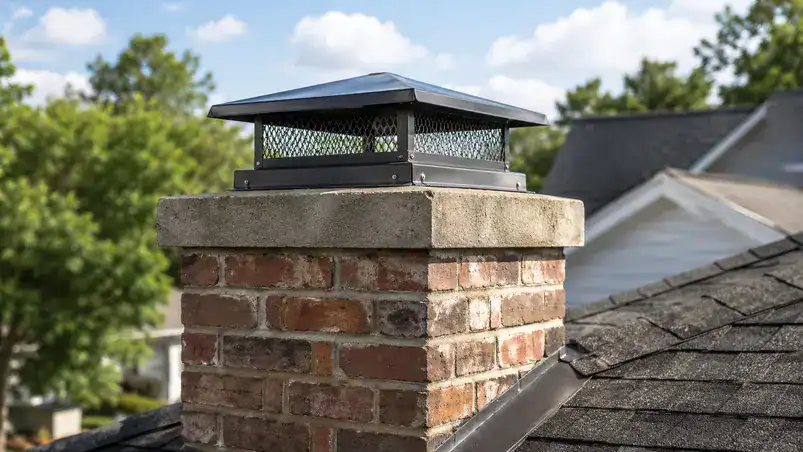
- Single-flue caps: Fit over one flue opening — the standard choice for most single-fireplace Nutley homes.
- Multi-flue / band-around caps: Cover the entire chimney crown and all flues at once, common on older homes with a furnace flue and fireplace flue sharing one chimney structure.
- Galvanized steel: The most affordable option, but the shortest-lived in New Jersey’s freeze-thaw climate — typically 8 to 12 years before rust becomes a problem.
- Stainless steel: A significant step up in corrosion resistance, generally lasting 15 to 20 years, and the option we recommend most often for straightforward replacements.
- Copper: The longest-lasting option — often 30 years or more — and develops a natural patina that many homeowners with older, architecturally distinct homes prefer for appearance as well as durability.
Permits and Nutley Requirements
Replacing a chimney cap is considered routine maintenance and typically does not require a building permit in Nutley or most New Jersey municipalities, since it doesn’t involve structural changes to the chimney itself. If cap replacement is done alongside crown repair, tuckpointing, or a chimney rebuild, that broader scope of work may fall under permit requirements — worth confirming with Nutley’s Building Department if your project extends beyond the cap alone.
2026 Chimney Cap Replacement Costs in Nutley
Pricing depends primarily on material and whether the chimney has one flue or several sharing a single crown:
| Cap Type / Material | Typical Nutley Price Range (2026, installed) | Expected Lifespan |
| Galvanized steel, single-flue | $150 – $300 | 8 – 12 years |
| Stainless steel, single-flue | $250 – $450 | 15 – 20 years |
| Copper, single-flue | $400 – $750 | 30+ years |
| Multi-flue / band-around cap | $350 – $700 | 15 – 25 years (material-dependent) |
| Spark arrestor mesh replacement only | $100 – $250 | 5 – 10 years |
| Cap replacement bundled with crown repair | $600 – $1,400 total | Varies by scope |
These are general planning ranges. A cap that looks fine from the ground can still be undersized or poorly fitted, which is why we recommend a direct inspection rather than guessing based on age alone.
How New Jersey Weather Wears Down a Chimney Cap
Essex County’s freeze-thaw winters are hard on any exposed metal, and a chimney cap sits fully exposed to the elements year-round. Water that collects on a poorly draining cap freezes and expands repeatedly through the coldest months, which is exactly the stress that turns a small rust spot into a hole. Summer thunderstorms add wind-driven rain that tests seals and seams, and falling branches from Nutley’s mature street trees add physical wear that a more sheltered chimney wouldn’t face. Fall, before the heating season starts, is the best time to catch a failing cap — waiting until winter means dealing with a leak or blockage right when the fireplace or furnace flue is needed most.
A Simple Checklist Before You Call Anyone
- Look at the chimney from the ground with binoculars, or check from an attic window if you have one, for visible rust, gaps, or a missing cap.
- Listen for scratching or rustling near the flue, especially in early morning or evening when animals are most active.
- Check the firebox and damper area for water stains, dampness, or debris after a rainstorm.
- Note how long it’s been since the cap was last replaced — 10+ years on galvanized steel is worth a closer look.
- If you’re planning any other chimney work, like crown repair or tuckpointing, ask about bundling cap replacement into the same visit.
- Get a free inspection before the heating season starts, so any issue is caught and fixed before cold weather makes it worse.
Why Nutley Homeowners Call BlueSky Roofing & Siding
BlueSky Roofing & Siding Solutions has been family-owned and operated for over 45 years, serving homeowners throughout Essex County, including Nutley. Every chimney inspection includes a direct look at the cap, crown, and flashing, not just a glance from the ground, so a small rust spot gets caught before it becomes a chimney repair project. We’re fully licensed and insured, and if the cap replacement uncovers a bigger issue with the crown or flue, we’ll walk you through the options honestly, with no pressure to upsell.
Browse recent chimney and masonry projects in our project gallery, read what neighbors across Essex and Passaic Counties have said in our customer reviews, or learn more about our team on our About Us page.
Frequently Asked Questions
How do I know if my chimney cap needs to be replaced?
Look for visible rust or holes, a cap that’s loose or missing, water stains near the fireplace after rain, or sounds of animals in the flue. Any of these point to a cap that’s no longer doing its job, even if the chimney itself looks fine from the ground.
How much does chimney cap replacement cost in NJ?
A single-flue cap typically costs $150 to $750 installed, depending on material — galvanized steel is the least expensive but shortest-lived, while stainless steel and copper cost more upfront but last significantly longer. Multi-flue caps covering an entire chimney crown generally run $350 to $700.
Do I need a chimney cap if I don’t use my fireplace?
Yes. An open flue lets in rain, snow, and animals regardless of whether the fireplace is ever used, and many chimneys also vent a furnace or water heater that needs the same protection year-round.
Can a missing chimney cap cause water damage inside my house?
Yes. Water entering an uncapped flue can travel down into the smoke chamber and firebox, damage the damper, and in some cases seep into surrounding masonry or the ceiling near the chimney chase — damage that often isn’t visible until it’s already significant.
What’s the best chimney cap material for New Jersey weather?
Stainless steel offers the best balance of cost and durability for most homeowners, typically lasting 15 to 20 years through New Jersey’s freeze-thaw cycles. Copper lasts even longer — often 30 years or more — and is a common choice for older, architecturally distinct homes.
Do I need a permit to replace a chimney cap in Nutley?
Generally, no. Cap replacement is considered routine maintenance in most New Jersey municipalities. If the project expands to include crown repair or a larger chimney rebuild, that additional work may require a permit — worth confirming with Nutley’s Building Department for anything beyond a straightforward cap swap.
Get a Free Chimney Inspection in Nutley
If your chimney cap looks rusted, damaged, or you’re not sure it’s even still there, a free inspection is the fastest way to find out what’s really going on before the next storm or the start of heating season. Request your free estimate or call (201) 686-1059 to schedule.

