
| Quick Answer: The most common chimney problems in Ridgewood NJ are cracked chimney crowns, failed step flashing at the roof junction, eroded mortar joints, and missing chimney caps. In Ridgewood’s older housing stock these issues are frequent because of New Jersey’s freeze-thaw winters. Most chimney repairs in Ridgewood range from $400 to $3,500 depending on the scope. A full chimney rebuild is significantly more but rarely necessary when problems are caught early. |
Ridgewood has some of the most architecturally significant residential housing in Bergen County. Tudors, Colonials, Craftsman bungalows, and Victorian-era homes line streets like Linwood Avenue and South Maple, and a large percentage of them have chimneys that are anywhere from 60 to 120 years old.
Old chimneys in good condition are one of the things that make Ridgewood homes what they are. Old chimneys that have been ignored are one of the most common and most expensive sources of water damage we find in Bergen County homes. This guide is for Ridgewood homeowners who want to understand what they are dealing with before they call.
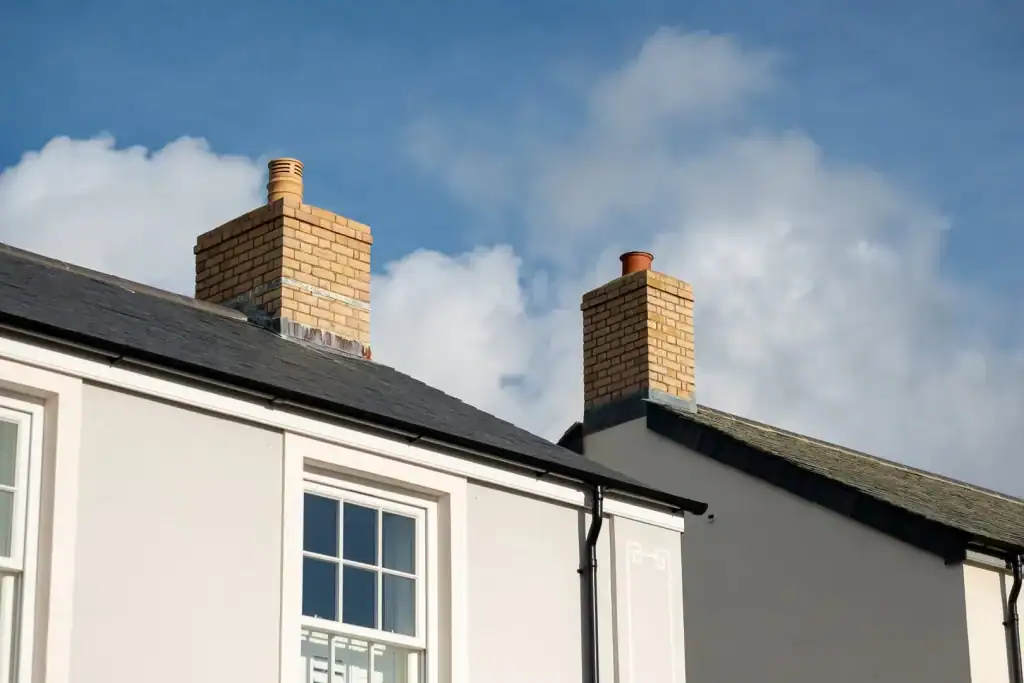
Why Ridgewood Chimneys Have More Problems Than Newer Construction
The Freeze-Thaw Cycle
This is the root cause of most chimney deterioration in New Jersey. Water enters small cracks in the mortar joints or the chimney crown, freezes during cold nights, expands as it freezes, and cracks the surrounding masonry further as it thaws. Over many winters this process accelerates. A crack that is 1/8 inch wide in October can be 1/2 inch wide by March after a single hard winter.
In Bergen County’s climate, with 30 to 40 freeze-thaw cycles per winter, this is not a slow process. It is why chimneys that look acceptable from the street in summer show visible deterioration by spring.
Age of Original Materials
Ridgewood homes built in the early to mid 20th century often have chimneys built with softer, more porous brick than modern construction. Those original bricks absorb more moisture. The original lime-based mortar, while durable for its time, has a finite lifespan and becomes increasingly crumbly after 60 to 80 years even without visible cracking.
Original Flashing
Many Ridgewood chimneys still have their original lead or aluminum flashing from installation. This flashing, even if it has been re-caulked multiple times over the decades, is at or past the end of its useful life. Re-caulking over failed flashing is a temporary fix that masks the underlying problem. At some point the caulk itself fails, and water finds its way under the flashing into the roof-chimney junction.
The 5 Most Common Chimney Problems We Find in Ridgewood
1. Cracked or Deteriorated Chimney Crown
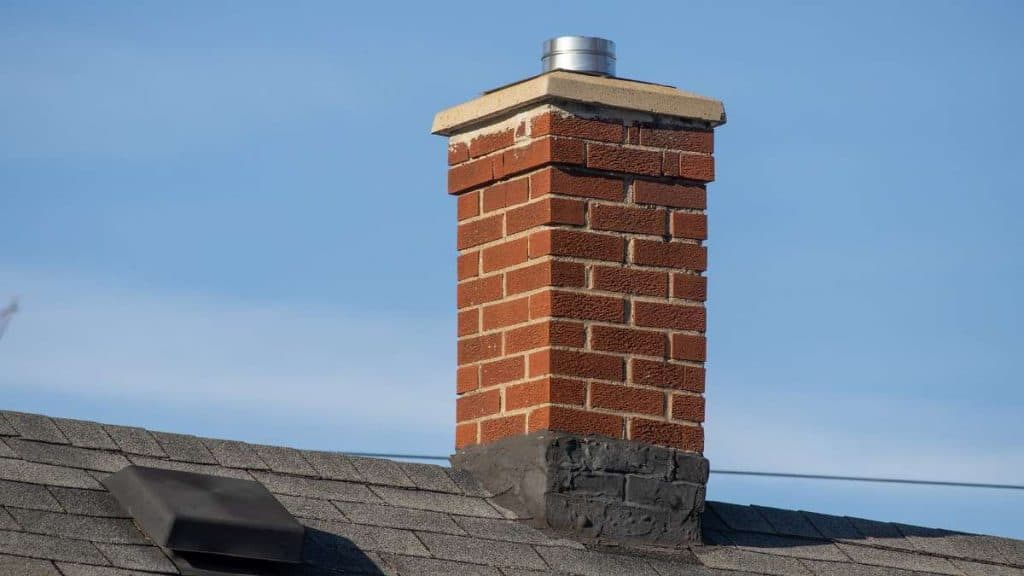
The chimney crown is the concrete cap that sits at the top of your chimney, sloping outward to direct water away from the masonry. It is the first line of defense against rain and snow. When the crown cracks from freeze-thaw stress or age, water enters directly into the chimney structure. Crown repair or replacement is one of the most common chimney jobs in Ridgewood and one of the most cost-effective things you can do to prevent larger damage.
2. Failed Step and Counter Flashing
This is the metal seal at the junction where your chimney meets the roof surface. Step flashing weaves between the shingles along the sides of the chimney. Counter flashing is embedded into the mortar joints of the chimney and laps over the step flashing to keep water out. When either fails, water runs directly into the roof-wall junction where it can travel down inside the wall cavity or the attic before ever creating a visible ceiling stain.
This is why so many Ridgewood homeowners are told by a contractor that their leak is a chimney flashing problem when they assumed it was the roof itself. Both need to be working correctly for the junction to be watertight.
3. Tuckpointing – Eroded Mortar Joints
The mortar between the brick courses on your chimney has a lifespan. On Ridgewood’s older chimneys that have never been repointed, the original mortar is often soft, crumbling, and allowing moisture to infiltrate directly through the chimney face. Tuckpointing is the process of removing deteriorated mortar to a depth of approximately 3/4 inch and replacing it with fresh mortar matched to the original color and composition. When done correctly it significantly extends the life of the masonry.
4. Missing or Damaged Chimney Cap
A chimney cap is the metal cover that sits over the flue opening at the top of the chimney. It keeps rain, snow, birds, squirrels, and debris out of the flue. Without a cap, water falls directly into the flue, soaks the smoke chamber and firebox, and can cause significant interior water damage. Missing chimney caps are one of the most common findings on Ridgewood inspections and also one of the easiest fixes.
5. Spalling Brick
When brick faces begin to pop off or chip away in layers, that is called spalling. It is caused by moisture penetrating the brick face and freezing inside the masonry. Spalling bricks need to be replaced individually or in sections. Left unaddressed, spalling spreads because each damaged brick accelerates moisture entry into the surrounding ones. In Ridgewood’s colder microclimates near Valley Road and Glen Avenue, we see significant spalling on north-facing chimneys that stay wet longer in winter.
What Chimney Repairs Cost in Ridgewood NJ
| Repair Type | Typical Range | Notes |
| Chimney cap replacement | $200 – $450 | Stainless or galvanized steel |
| Crown repair / resurfacing | $300 – $800 | Depends on crack extent |
| Crown full replacement | $600 – $1,400 | When cracks are severe |
| Tuckpointing (per linear foot) | $15 – $25 | Full chimney: $800 – $2,500 |
| Step flashing replacement | $400 – $1,200 | At chimney-roof junction |
| Chimney waterproofing | $200 – $600 | Penetrating sealer application |
| Spalling brick replacement | $500 – $3,000+ | Depends on extent of damage |
These ranges reflect what we quote on Ridgewood jobs. Final pricing depends on chimney height, access, the extent of damage found during inspection, and whether scaffolding is needed for taller chimneys on Ridgewood’s larger homes.
When Is a Chimney Repair Versus a Chimney Rebuild?
A full chimney rebuild is exactly what it sounds like: tearing the chimney down to the roofline or below and rebuilding it with new materials. This is necessary when the structural integrity of the chimney has been compromised to the point where repairs cannot restore it safely. Signs that point toward rebuild rather than repair:
- The chimney leans visibly when viewed from the street or from the roof
- Multiple courses of brick have spalled or are structurally unsound
- The chimney liner is cracked or has collapsed
- Water has been entering the structure for years and has damaged the interior masonry extensively
Most Ridgewood chimney situations we encounter are repairs, not rebuilds. When problems are caught before they reach structural failure, repair is almost always both possible and significantly less expensive.
NFPA 211 Inspection Standards – What Ridgewood Homeowners Should Know
The National Fire Protection Association’s standard NFPA 211 defines three levels of chimney inspection. If you have a working fireplace in your Ridgewood home, a Level 1 inspection annually and a Level 2 inspection when buying or selling the property are the recommended standard of care.
- Level 1: Visual inspection of accessible portions of the chimney interior and exterior. Recommended annually.
- Level 2: Includes all of Level 1 plus video scanning of the flue interior. Required at change of ownership and after any chimney event such as a fire, earthquake, or impact.
- Level 3: Involves removal of building components to access hidden areas. Required when a Level 2 inspection reveals suspected damage that cannot be confirmed visually.
We perform Level 1 and Level 2 chimney inspections in Ridgewood and throughout Bergen County. See our chimney inspection services
Chimney Cleaning – What Ridgewood Fireplace Owners Need to Know
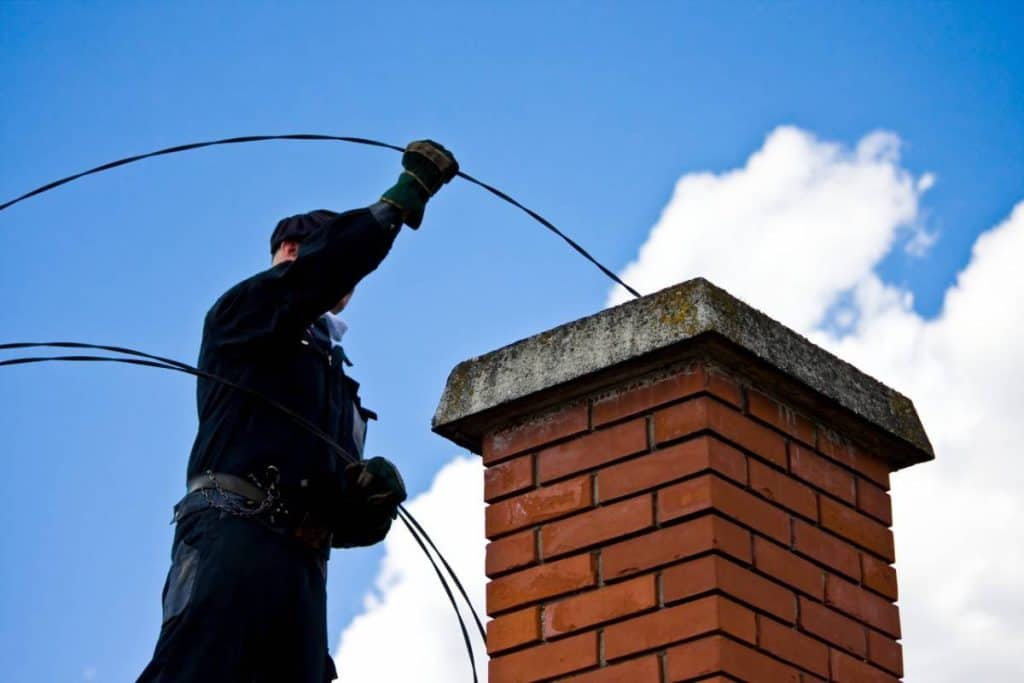
If you use your Ridgewood fireplace regularly, annual chimney cleaning is not optional. Creosote, the tar-like byproduct of wood combustion, builds up inside the flue lining and is the primary fuel source for chimney fires. A chimney fire in an older Ridgewood home with a clay tile liner can crack the liner and create a fire hazard that requires immediate and expensive repair.
Cleaning should be done by a qualified technician before each heating season. We perform chimney cleaning throughout Bergen County and can combine cleaning, inspection, and any needed repairs in a single visit.
See our chimney cleaning services for Ridgewood and Bergen County.
Frequently Asked Questions – Chimney Repair in Ridgewood
My ceiling stain is near the fireplace but my roofer says the roof is fine. Who is right?
Possibly both. The chimney flashing junction is where most confusion happens. The roof itself may be fine while the step flashing or the crown above is failing. We evaluate the complete chimney-roof system together and give you a single diagnosis rather than splitting responsibility between two contractors.
How long does chimney tuckpointing last?
Quality tuckpointing with properly mixed mortar should last 20 to 30 years in NJ conditions. The key is using mortar that matches the original in composition. Mortar that is too hard compared to the original brick causes the brick face to crack rather than allowing the mortar joint to absorb stress as it was designed to do.
Can I waterproof my chimney myself with products from a hardware store?
Consumer-grade masonry sealers are not appropriate for chimneys. The correct product is a penetrating vapor-permeable chimney waterproofer that allows moisture to escape from inside the masonry while blocking water entry from outside. Using a film-forming sealer traps moisture inside the brick, accelerating the exact freeze-thaw damage you are trying to prevent. Use a professional application.
| Get Your Free Estimate Call or text: (201) 686-1059 Online: blueskyroofingsiding.com/chimney/Free inspections. No pressure. No obligation. Licensed and insured NJ contractor. |
| Related Pages on BlueSky Roofing & Siding: Chimney Services – Inspection, Repair, CleaningChimney Inspection NJChimney Repair NJRoofing in Bergen County |

