
By BlueSky Roofing & Siding Solutions | Licensed NJ Roofer | (201) 686-1059
| QUICK ANSWER |
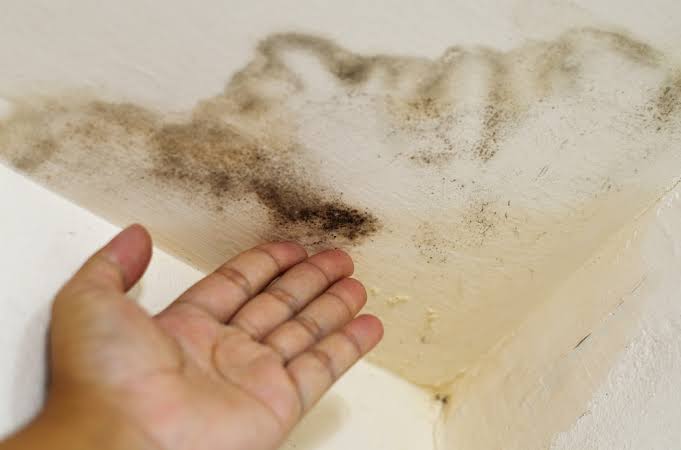
If a bathroom ceiling leak in Clifton, NJ appears only during or shortly after rain, the most likely causes are a failed plumbing vent boot, damaged roof flashing, lifted shingles, or another roof penetration above the room. If the stain grows when a shower, sink, toilet, or upstairs fixture is used—even in dry weather—the source is more likely plumbing or condensation. Because water can travel along rafters and pipes before it reaches the ceiling, the visible stain is not always directly below the actual leak.
Why Bathroom Ceiling Leaks Are Difficult to Diagnose
A brown ring, damp patch, or drip near a bathroom fan often makes homeowners assume the roof is failing. Sometimes that is correct, but bathrooms also contain supply lines, drain lines, plumbing vent stacks, and exhaust ducts. Any of these components can produce moisture in roughly the same location. The fastest way to narrow the problem is to compare the timing of the leak with the weather and with how the bathroom is being used.
A leak that appears during wind-driven rain is different from one that shows up after every shower. A stain that is directly below attic space is different from one below a second-floor bathroom. A professional inspection should consider both the exterior roof system and the conditions inside the attic before recommending a repair. Replacing shingles without confirming the source can leave the real problem untouched, while calling a plumber for a failed roof boot wastes time and allows more water into the home.
The Most Common Causes of a Bathroom Ceiling Leak in Clifton, NJ
The following problems account for most bathroom-area ceiling leaks we inspect in Clifton and surrounding Passaic County communities.
1. A Cracked Plumbing Vent Boot
A plumbing vent stack is the vertical pipe that exits through the roof and allows the home’s drain system to equalize pressure. Where the pipe passes through the shingles, a vent boot or pipe flashing creates a watertight seal. The boot usually includes a metal or plastic flange and a flexible collar that fits tightly around the pipe.
Sun exposure, temperature changes, age, and movement can cause the collar to split, shrink, or pull away. Once a gap develops, rainwater can run down the outside of the vent pipe into the attic. It may then follow the pipe or a rafter before soaking the bathroom ceiling. GAF identifies damaged vent pipe collars and flashing as common causes of roof vent pipe leaks.
A failed pipe boot can look minor from the ground, yet it creates a direct opening at a roof penetration. The correct repair usually involves removing the affected shingles, checking the decking for moisture damage, installing correctly sized flashing, and integrating it with the shingle courses so water sheds over—not behind—the repair.
2. Bathroom Exhaust Duct Condensation
Not every stain near a bathroom fan is rainwater. Warm, humid air from a shower can condense inside a cold exhaust duct that passes through an unconditioned attic. If the duct is poorly insulated, disconnected, sagging, or routed incorrectly, moisture can collect and run back toward the fan housing.
Condensation is more likely when the stain appears during cold weather, becomes worse after long showers, or occurs even when there has been no rain. The attic may show damp insulation around the duct but no obvious water trail from the roof deck. Correcting this issue may require insulating or reconnecting the duct, improving its route, and confirming that it terminates outdoors through an appropriate roof or wall cap. A roofing inspection is still useful because the exterior vent cap and its flashing must also be checked.
3. A Plumbing Supply or Drain Leak
If another bathroom, laundry area, or plumbing line is above the stain, the source may be inside the home rather than on the roof. Supply-line leaks may continue regardless of weather. Drain leaks often appear only when a particular sink, shower, tub, or toilet is used. A failed toilet seal can also send water into the ceiling below.
A simple timing test can provide a clue: note whether the stain changes after rain, after bathroom use, or both. Do not open the ceiling or disturb wet materials if electrical wiring, mold, or a sagging section may be present. A roofer can rule out roof entry points, while a licensed plumber can pressure-test or inspect the plumbing system.
4. Damaged Shingles, Flashing, or Roof Valleys
The leak may originate several feet away from the bathroom. Wind-lifted shingles, exposed fasteners, failed flashing at a wall or chimney, and problems in a roof valley can allow water under the roof covering. Gravity then carries the water along the roof deck or framing until it drops near the bathroom.
This is why sealing the ceiling stain or applying caulk around the interior fan does not solve the problem. The entry point must be found on the roof. BlueSky’s roof leak repair service includes inspection of shingles, flashing, penetrations, valleys, and drainage areas so the repair addresses the source rather than only the symptom.
5. Ice Dams and Winter Moisture
Northern New Jersey’s winter temperature swings can create conditions for ice dams. Snow melts on a warmer upper roof, refreezes near the colder eaves, and can force water beneath shingles. The resulting leak may appear around exterior walls, bathrooms, or other rooms near the roof edge. The National Weather Service notes that repeated melting and refreezing can push water under shingles and into attics.
Winter stains can also come from attic condensation caused by warm, moist indoor air escaping through gaps around fans, lights, or plumbing penetrations. A complete inspection should evaluate insulation, ventilation, air leakage, and the roof covering instead of assuming every winter stain is caused by a single damaged shingle.
How to Tell a Roof Leak from a Plumbing Leak
Use the following clues to narrow the source without climbing onto the roof:
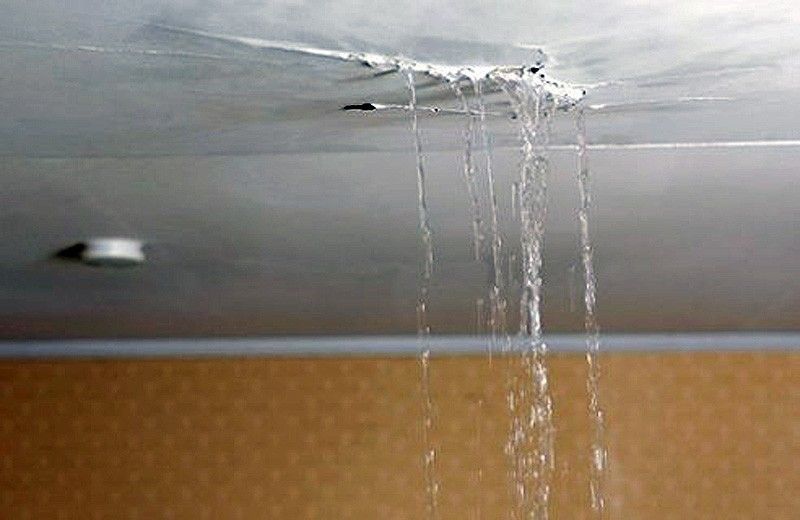
Rain timing: If the stain grows during rain or snowmelt, suspect the roof, flashing, or an exterior vent penetration.
Fixture timing: If dripping starts when a shower, sink, toilet, or appliance is used, suspect plumbing or bath-fan condensation.
Location above the stain: Attic space above the bathroom points toward the roof or ductwork. A second-floor bathroom above the stain points toward plumbing.
Attic evidence: Wet roof decking, dark water trails on rafters, or damp insulation below a pipe penetration support a roof diagnosis. Condensation inside or around an exhaust duct points toward ventilation.
Pattern: A roof leak may appear only during wind from a certain direction because wind-driven rain reaches a vulnerable flashing detail. Plumbing leaks are usually connected to fixture use or water pressure, not wind direction.
Remember that these are clues, not a final diagnosis. Water often travels before becoming visible. A stain five feet from a vent pipe can still be caused by the vent boot.
What to Do Immediately When Water Appears
First, protect people and the interior. Place a container under an active drip and move valuables away from the area. If water is near a light fixture, exhaust fan, outlet, or other electrical component, avoid touching the wet area and shut off power to the affected circuit only if you can do so safely. Contact an appropriate professional promptly.
Photograph the stain, the surrounding ceiling, and any visible attic moisture. Record whether it was raining, how long the rain had lasted, and which fixtures were recently used. This information can shorten the inspection process and may help with an insurance claim if the damage is storm-related.
Do not climb onto a wet, icy, or steep roof. Do not rely on interior paint, ceiling patching, or a bead of household caulk as a permanent repair. If the ceiling is bulging, the leak is heavy, or water is spreading rapidly, use BlueSky’s 24/7 emergency roofing service to stabilize the roof and limit further damage.
Acting quickly also reduces the risk of secondary damage. The U.S. Environmental Protection Agency recommends drying wet materials within 24 to 48 hours in most cases to help prevent mold growth.
Why Clifton Roof Penetrations Need Regular Attention
Clifton homes experience year-round precipitation, summer heat, winter freezing, and strong storms. Rutgers’ New Jersey climate overview reports that many parts of the state average roughly 43 to 47 inches of precipitation annually, with higher totals in some north-central areas. That repeated wetting, drying, heating, and freezing stresses flexible seals and flashing details.
Bathrooms commonly sit near plumbing vent stacks and exhaust outlets, so the roof above them may contain more penetrations than other rooms. Each penetration is designed to remain watertight, but it must be installed in the correct shingle sequence and kept in serviceable condition. The field of shingles can still look good while a ten- or fifteen-year-old rubber collar has started to crack.
BlueSky Roofing & Siding is based at 310 Colfax Ave in Clifton, which allows the team to serve homeowners throughout Clifton and Passaic County quickly. For location-specific service information, see our roof leak repair page for Passaic County.

What a Professional Roof Leak Inspection Should Include
A useful inspection does more than look at the stain. The roofer should trace the likely water path from the interior to the exterior and evaluate the full roof area above and upslope from the damage. The process may include:
- inspecting all plumbing vent boots and roof caps near the bathroom;
- checking shingle condition, nail placement, seal strips, and exposed fasteners;
- examining step flashing, counterflashing, valleys, skylights, and wall intersections;
- inspecting the attic for water tracks, wet insulation, soft decking, and ventilation issues;
- checking the bathroom exhaust duct for disconnection, poor insulation, or condensation;
- reviewing gutters and downspouts for backups that can direct water toward the roof edge; and
- documenting findings with photos and explaining whether the issue requires roofing, plumbing, ventilation, or a combination of services.
If clogged or damaged drainage is contributing to the problem, BlueSky also provides gutter repair and installation services in New Jersey.
Repair or Roof Replacement: Which Is More Likely?
A bathroom ceiling leak does not automatically mean you need a new roof. A targeted repair is often appropriate when the roof is otherwise in good condition and the problem is limited to one vent boot, a small flashing section, or a few damaged shingles.
Replacement becomes more likely when the roof is near the end of its service life, leaks are appearing in multiple areas, shingles are broadly curled or missing, the decking is deteriorated, or previous patches have repeatedly failed. The decision should be based on the condition of the full roofing system, not fear created by one stain.
BlueSky’s Passaic County service page lists typical roof-leak repair ranges of about $300 to $600 for minor repairs and $600 to $900 for more involved work, with emergency stabilization potentially costing more. Actual pricing depends on roof pitch, access, materials, number of penetrations, and hidden decking or interior damage. A written inspection and estimate is the only reliable way to price the specific problem. If the roof has widespread deterioration, review the company’s roof replacement services before deciding.
How to Reduce the Chance of Another Bathroom Ceiling Leak
Prevention is usually less expensive than repairing ceilings, insulation, and roof decking. Have roof penetrations checked during routine inspections, especially once the roof and rubber components are more than a decade old. Keep gutters and downspouts clear so water leaves the roof efficiently. After major wind, hail, or snow events, inspect the property from the ground for missing shingles, displaced flashing, or debris damage.
Run the bathroom exhaust fan during showers and for a period afterward, but make sure the duct actually terminates outdoors. In the attic, the duct should be connected, supported, and insulated as appropriate. Watch for recurring stains, musty odors, peeling paint, or damp insulation. A stain that dries does not prove the leak has stopped permanently; it may simply mean the weather or fixture use changed.
Finally, keep photos and records of inspections and repairs. If a new stain appears later, that history helps the contractor compare conditions and identify whether the issue is new or recurring.
Schedule a Bathroom Ceiling Leak Inspection in Clifton
A ceiling stain is a warning, not a diagnosis. The most cost-effective response is to identify the source before repairing drywall or repainting. BlueSky Roofing & Siding Solutions is a family-owned, licensed and insured New Jersey contractor with more than 45 years of experience. We inspect roof penetrations, shingles, flashing, attic conditions, and drainage to determine whether the leak needs a focused repair, emergency stabilization, or broader roofing work.
Clifton homeowners can call (201) 686-1059 or request a free roof inspection and estimate online. You can also review completed roofing projects and verified customer reviews before scheduling.
Frequently Asked Questions
Can a roof vent leak directly above a bathroom?
Yes. Plumbing vent stacks and bathroom exhaust outlets commonly pass through the roof near bathrooms. If the pipe boot, cap, or flashing fails, rain can enter the attic and appear on the bathroom ceiling.
Why does my bathroom ceiling leak only when it rains hard?
Wind-driven rain can reach a small gap in flashing or a cracked vent boot that stays dry during lighter rain. A valley, lifted shingle, or exposed fastener upslope from the bathroom can also leak only during heavier storms.
Why is there a stain near the bathroom fan when it has not rained?
The likely causes include condensation inside an uninsulated exhaust duct, a disconnected duct, or plumbing above the ceiling. Track whether the stain changes after showers or fixture use and have the attic and roof cap inspected.
Can I fix a cracked pipe boot with caulk?
Caulk may provide a short temporary seal, but it does not restore deteriorated rubber or correct improperly integrated flashing. A lasting repair normally requires replacing or properly repairing the boot and checking the surrounding shingles and decking.
Does one ceiling stain mean the entire roof needs replacement?
No. Many bathroom-area leaks are localized. Replacement is usually considered when the roof has widespread age-related damage, repeated leaks, failing decking, or multiple compromised sections.
How quickly should a bathroom ceiling leak be inspected?
An active leak should be inspected as soon as possible, particularly if water is near electricity, the ceiling is sagging, or the stain is spreading. Even a small stain should be checked before the next major storm.
Should I call a roofer or a plumber first?
Call a roofer first when the leak follows rain, snowmelt, or wind and there is attic space above the bathroom. Call a plumber first when the leak follows fixture use or there is another bathroom directly above. When the evidence is unclear, either professional may need to help rule out their system.
How much does roof leak repair cost in Clifton, NJ?
Minor local repairs may fall in the few-hundred-dollar range, while flashing work, multiple damaged areas, steep access, emergency service, or wet decking can increase the price. BlueSky provides free on-site inspections and written estimates so homeowners can see the cause and scope before approving work.

