
If you own a home in Clifton, there’s a good chance your gutters are working harder than you think. Between the older housing stock in neighborhoods like Athenia, Richfield, and Allwood, the mature tree canopy that lines streets near Clifton Commons and Weasel Brook Park, and the freeze-thaw cycles New Jersey winters throw at us every year, gutters here take a beating that homeowners in drier climates never have to think about.
We’ve spent over 45 years working on roofs, siding, and gutter systems across Passaic County, and gutters are one of the most overlooked parts of a home until something goes wrong — a soaked basement, a cracked foundation, or siding that starts to rot from the bottom up. This guide walks through everything a Clifton homeowner needs to know about gutter repair and installation: the warning signs, the real cost drivers, seamless vs. sectional systems, whether gutter guards are worth it in a town with as many oak and maple trees as ours, and how to tell when it’s time to call a professional instead of grabbing a ladder yourself.
Why Gutters Matter More in Clifton Than Most People Realize
Clifton sits along the Passaic River and Third River watershed, and a lot of the city’s older homes — especially the Cape Cods and Colonials built from the 1940s through the 1960s — were constructed with gutter systems that were never designed for the volume of rain New Jersey sees today. Storm intensity in the Northeast has increased noticeably over the past two decades, and a gutter system that was adequate 30 years ago may simply not be able to keep up now.
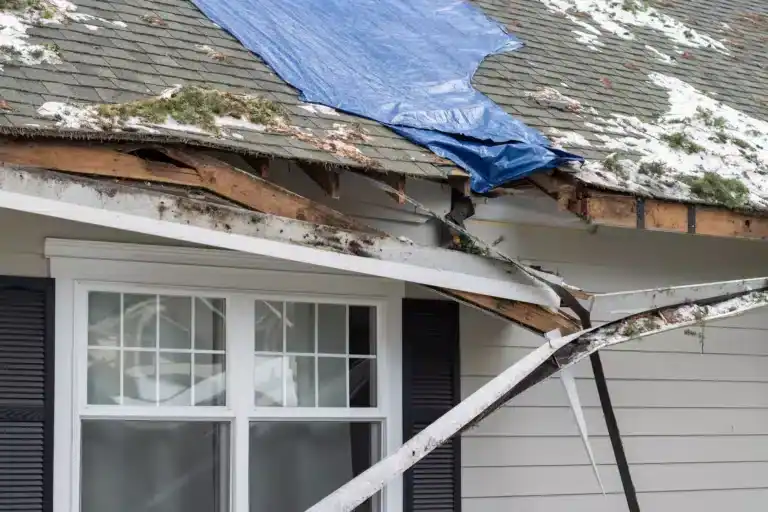
When gutters fail, the water doesn’t just disappear — it goes somewhere. In Clifton specifically, we see three recurring problems tied directly to gutter failure:
- Foundation and basement water intrusion. Many Clifton homes have below-grade basements. When gutters overflow or downspouts dump water too close to the foundation, that water finds its way in.
- Fascia and soffit rot. Homes with wood fascia boards (common in the borough’s older construction) are especially vulnerable to rot when gutters back up and hold standing water against the wood.
- Ice damming in winter. When gutters are clogged with leaves in the fall and then freeze solid in January, melting snow from the roof has nowhere to go and backs up under the shingles — which is a roofing problem that started as a gutter problem.
If you’ve ever wondered why your basement smells musty every spring, or why your paint keeps peeling near the roofline, your gutters are usually the first place to look.
Signs Your Gutters Need Repair (Not Full Replacement)
Not every gutter issue means starting over. Here’s what typically indicates a repair will do the job:
- Water spilling over the front of the gutter during rain, even though the gutter itself isn’t clogged — usually a pitch (slope) problem
- Visible sagging between hangers, usually from age or the weight of wet leaves
- Small separations at the seams on sectional aluminum gutters
- Rust spots or pinhole leaks in isolated sections
- Downspouts that are disconnected or dumping water right at the foundation
- Gutters pulling away from the fascia board in one or two spots but structurally sound elsewhere
A repair is almost always the more cost-effective route when the damage is localized, the gutter material itself is still in decent shape, and the underlying fascia hasn’t rotted.
Signs You Need Full Gutter Replacement
Replacement becomes the smarter investment when:
- The gutters are original to a home built more than 20–25 years ago
- You see rust or corrosion running along most of the length of the system, not just one section
- The fascia board behind the gutter is soft, rotted, or has visible water staining across multiple sections
- You’ve had the same sections repaired more than once in the last two or three years
- You’re planning a roof replacement anyway — this is the ideal time to upgrade the gutter system, since the roofline is already exposed
If you’re already noticing granule loss, curling shingles, or other signs your roof itself may be due, it’s worth reading our guide on how to know if you need a roof replacement in New Jersey — gutters and roofing age together, and replacing both at once saves on labor overlap.
Seamless Gutters vs. Sectional Gutters: Which Is Better for a Clifton Home?
This is one of the most common questions we get on estimates, and the honest answer depends on your home, but seamless aluminum gutters have become the standard for a reason.
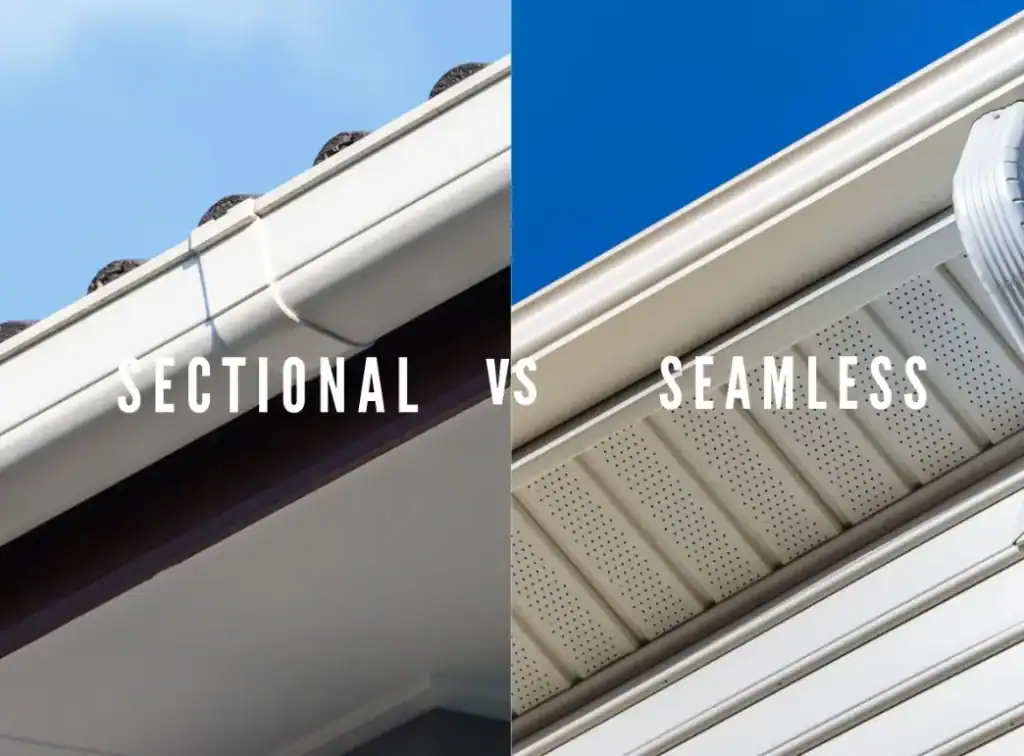
Seamless gutters are formed on-site from a continuous roll of aluminum, cut to the exact length of each roofline run. Because there are no seams along the length of the gutter (only at corners and downspout connections), there are far fewer places for leaks to develop over time. For a typical Clifton Cape Cod or Colonial with straightforward rooflines, seamless gutters usually mean:
- Fewer leak points over the life of the system
- A cleaner, more finished appearance
- Less debris buildup at seams
- Better performance during heavy downpours, since there’s no joint to overflow at
Sectional gutters (the pre-cut pieces you’d find at a hardware store) are less expensive up front and can be a reasonable option for smaller repair jobs, sheds, or additions, but for a full gutter system on a primary residence, they tend to develop leaks at the seams faster — especially with the freeze-thaw cycling New Jersey winters bring.
For most homes in Clifton, we recommend seamless aluminum in either a K-style or half-round profile, matched to the home’s architectural style. Older Colonials and homes near the historic districts often look better with half-round profiles, while most standard Cape Cods and split-levels do well with K-style.
Are Gutter Guards Worth It With Clifton’s Tree Canopy?
Short answer: for most homes here, yes — but not all guard systems are created equal.
Clifton has a heavier residential tree canopy than a lot of surrounding towns, particularly older sections with mature oaks, maples, and sycamores. That means more leaf and seed-pod debris in gutters every fall, and more clogging risk than a newer development with young, small trees would have.
Micro-mesh gutter guards are generally the best long-term investment for this kind of environment. They block small debris (like maple seed pods and pine needles) that cheaper screen-style guards let through, while still allowing water to flow freely. The upfront cost is higher than basic screens, but it dramatically reduces how often gutters need to be cleaned — often down to once a year instead of two or three times.
That said, gutter guards are not a “install and forget forever” solution. They still need occasional inspection, especially after major storms, and they work best when installed on a gutter system that’s already in good structural condition. Installing guards on gutters that are already sagging or rusted just delays a repair that’s coming anyway.
What Does Gutter Repair or Replacement Typically Cost in New Jersey?
Every home is different, and the only way to get an accurate number is a free, in-person inspection — but to give Clifton homeowners a general sense of what drives cost, here’s what typically factors into a quote:
- Linear footage of gutter needed around the home
- Number of corners, downspouts, and outlets required for proper drainage
- Roof pitch and accessibility — steep or multi-story homes require more labor and safety equipment
- Material choice — standard aluminum vs. copper or heavier-gauge commercial-grade aluminum
- Whether fascia repair or replacement is needed underneath
- Gutter guard add-ons, if you choose to include them
Repairs to a small section can often be handled in a single visit for a modest cost, while a full seamless gutter replacement on an average single-family home is a larger investment — but one that typically protects a far more expensive asset (your foundation, siding, and roof) from ongoing water damage. We provide free, honest, no-pressure estimates so you know exactly what your home needs before any work begins — not a generic number pulled from a national average.
Why Gutters, Roofing, and Siding Should Be Evaluated Together
Gutters don’t operate in isolation. Water that isn’t properly captured and redirected by your gutter system ends up affecting your roofline, your fascia, and often your siding as well. We’ve walked into more than one Clifton estimate where the homeowner called about a “gutter problem” that turned out to be water intrusion damaging the siding at the corner of the house, or a soft spot in the roof deck caused by years of ice damming from a clogged system.
This is why we always recommend a full exterior evaluation rather than looking at gutters in a vacuum. If you’re dealing with water stains near your roofline, it’s worth having both your gutter system and your roof leak repair needs assessed at the same time, since the root cause is often connected. The same goes for siding — if water is pooling at the base of exterior walls, gutters are usually the first thing we check before recommending any siding work.
A Recent Example From the Field
We recently worked with a homeowner in Passaic, just south of Clifton, whose gutters had been overflowing at one specific corner of the house for over a year. She assumed the whole system needed replacing. After a full inspection, it turned out the issue was a single damaged hanger and an undersized downspout that couldn’t keep up with the roof’s runoff during heavy storms — a straightforward, affordable repair rather than a full replacement. That’s the value of a proper inspection instead of guessing: sometimes the fix is smaller (and cheaper) than homeowners expect, and sometimes it isn’t. Either way, you deserve an honest answer, not an upsell.
DIY Gutter Cleaning vs. Calling a Professional
We get it — a lot of homeowners want to handle basic gutter cleaning themselves, and for single-story homes with easy ground access, that can be reasonable a couple of times a year. But we’d strongly recommend calling a professional instead of climbing a ladder if:
- Your home is two stories or more
- Your roofline has multiple pitches or valleys that make footing unstable
- You’re dealing with recurring clogs (which usually points to a design or slope issue, not just leaves)
- You notice sagging, separated seams, or fascia damage — these require repair, not just cleaning
- You simply don’t have the right ladder, harness, or experience working at height
Roofing and gutter work involves real fall risk, and it’s one of the more common sources of home-related injuries every fall season in New Jersey. A 15–20 minute inspection from a licensed, insured contractor costs you nothing and removes the guesswork — and the risk.
Serving Clifton and All of Passaic County
BlueSky Roofing & Siding is based right here in Clifton, and gutter repair and installation is one of the services we handle most often throughout Passaic County, including Clifton, Passaic, Paterson, and the surrounding communities. Being local means we know which neighborhoods deal with heavier tree debris, which streets tend to flood during nor’easters, and which older housing stock needs extra attention around fascia and soffit areas. You can read more about our team’s history and approach on our About Us page, or see what neighbors across Passaic County have said about working with us on our reviews page.
Frequently Asked Questions
How often should gutters be cleaned in Clifton, NJ? Most homes with moderate tree coverage need cleaning twice a year — once in late spring after seed pods drop, and once in late fall after leaves have come down. Homes surrounded by mature oaks or pines may need a mid-season check as well.
Can I install gutter guards myself? You can install basic screen guards yourself on a single-story home, but professional installation is recommended for micro-mesh systems, multi-story homes, or any gutter that isn’t already in solid structural condition. Guards installed over damaged gutters won’t solve the underlying problem.
Do gutters need a permit in Clifton? Routine gutter repair and replacement typically does not require a permit in most New Jersey municipalities, but requirements can vary and it’s always worth a quick check with Clifton’s local building department if you’re unsure, especially for larger structural changes.
What’s the difference between K-style and half-round gutters? K-style gutters have a flat back and decorative front profile and are the most common choice in New Jersey due to their higher water capacity. Half-round gutters have a curved, traditional look often used on older Colonial or historic-style homes, though they typically hold slightly less water per linear foot.
How long do seamless aluminum gutters last? With proper maintenance, seamless aluminum gutters typically last 20–30 years in the New Jersey climate — significantly longer than sectional systems, which tend to develop seam leaks sooner.
Should I replace my gutters at the same time as my roof? If your roof is already due for replacement, it’s usually the most cost-effective time to also replace aging gutters, since the roofline and fascia are already accessible and labor can be combined.
Get a Free Gutter Inspection in Clifton, NJ
If your gutters are overflowing, sagging, pulling away from the house, or you just haven’t had them looked at in a few years, don’t wait for a leak to tell you there’s a problem. BlueSky Roofing & Siding offers free, no-obligation gutter inspections and estimates throughout Clifton and Passaic County — with honest recommendations, not upselling.
Call (201) 686-1059 or request your free estimate online today.

