
By BlueSky Roofing & Siding Solutions | Serving Essex County, NJ | (201) 686-1059
Quick Answer: Most poor-ventilation problems in Bloomfield homes come down to one thing: intake and exhaust vents that aren’t balanced. A hot, stuffy attic in summer, curling or blistering shingles, ice dams along the eaves in winter, and musty smells near the attic hatch are the four biggest red flags. The fix is usually a combination of soffit intake vents and a continuous ridge vent, sized to roughly 1 square foot of ventilation for every 150–300 square feet of attic floor. A full balanced retrofit typically runs $1,200–$3,500, though it’s often far cheaper when bundled into a planned roof replacement.
If your attic feels like an oven every time you go up for the holiday decorations, or you noticed a thick ridge of ice building up along the eaves last winter, your roof is probably trying to tell you something. It’s rarely the shingles themselves that are the problem — it’s what’s happening underneath them. Roof ventilation is one of the most overlooked parts of a home’s exterior, and it’s especially common to see it neglected in Bloomfield, where a large share of the housing stock was built between the 1920s and the 1950s, long before modern attic ventilation standards existed.
Walk down streets near Brookdale Park, Watsessing, or the Franklin Street corridor and you’ll see block after block of Capes, Colonials, and Tudor-style homes with tight rooflines, finished or partially finished attics, and additions that have boxed in what little airflow the attic originally had. That combination — older construction, dense tree cover, and homes packed close together — makes Bloomfield a town where ventilation problems show up earlier and cause more damage than they would in a newer development. Here’s how to spot the signs, understand what’s actually happening in your attic, and know what a proper fix costs in 2026.
Why Roof Ventilation Problems Show Up Early in Bloomfield
Most of Bloomfield’s older homes were built with minimal attic ventilation by today’s standards — often just a pair of small gable vents, or none at all. Over the decades, insulation upgrades, finished attic spaces, and additions have frequently blocked whatever soffit intake existed originally, cutting off the airflow the roof depends on. Add in mature tree canopy across much of the township, which traps humidity and slows how quickly a roof surface dries out after rain, and you have a recipe for attics that run hotter in summer and wetter in winter than they should.
Newer construction near the Watchung border or in more recently developed sections tends to have better-designed ventilation from the start, but even those homes can develop problems if insulation contractors accidentally cover soffit vents during an upgrade — one of the most common (and preventable) causes of ventilation failure we see on inspections.
7 Signs Your Attic Isn’t Ventilated Properly
Poor ventilation rarely announces itself all at once. Watch for these signs, especially as the seasons change:
- The attic feels noticeably hotter than the outdoor temperature on a summer afternoon — sometimes 30 to 50 degrees hotter.
- Shingles are curling, cracking, or blistering earlier than expected, particularly on south- and west-facing slopes.
- Ice dams form along the eaves in winter, even after modest snowfall, especially over rooms with vaulted or finished ceilings below.
- A musty or stale smell near the attic hatch or pull-down stairs, even when there’s no visible leak.
- Frost or condensation on the underside of the roof deck or nail heads, visible if you check the attic on a cold morning.
- Higher-than-expected summer cooling bills, since a superheated attic radiates heat down into living spaces below.
- Visible mold or dark staining on roof sheathing, rafters, or insulation when viewed from inside the attic.
What Happens When Ventilation Fails
Poor ventilation doesn’t just make the attic uncomfortable — it actively shortens the life of everything around it.
- Shingle life drops. Manufacturers test shingle warranties assuming proper attic ventilation. Trapped heat accelerates the breakdown of asphalt shingles from underneath, and many warranties are voided entirely if ventilation doesn’t meet code.
- Ice dams get worse. In winter, heat escaping into a poorly ventilated attic melts snow on the upper roof, which refreezes at the colder eaves — building the ice dams that force water back up under shingles and into the house.
- Moisture gets trapped. Without airflow to carry humidity out, moisture condenses on the roof deck and rafters, feeding mold growth and slowly rotting the wood structure.
- Energy bills climb. A hot attic in summer and a damp, poorly insulated attic in winter both make your HVAC system work harder than it should.
Types of Roof Ventilation Systems
A properly ventilated roof needs both intake (fresh air coming in low) and exhaust (hot, humid air leaving high), working together in balance. Neither one works well without the other:
- Soffit vents (intake): Installed under the eaves, these let cool outside air into the attic at its lowest point.
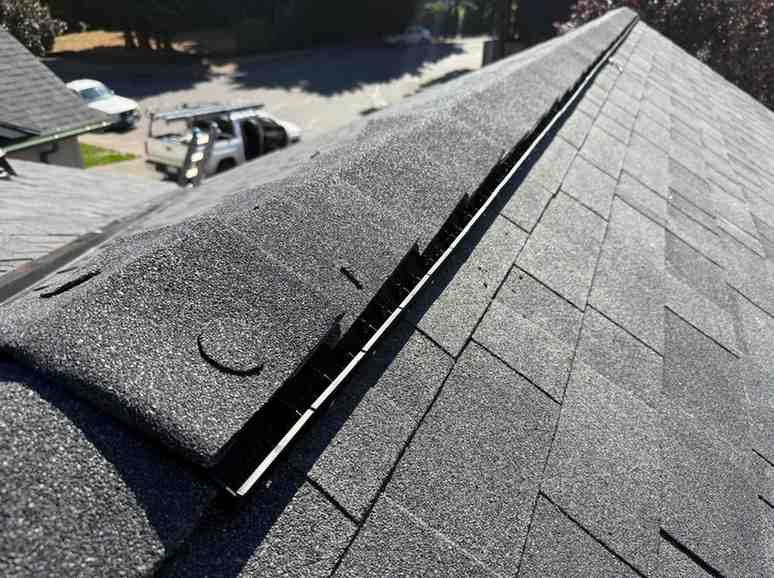
- Ridge vents (exhaust): A continuous vent along the peak of the roof that lets hot air escape evenly along the entire ridge line — generally the most effective and least visually intrusive exhaust option.
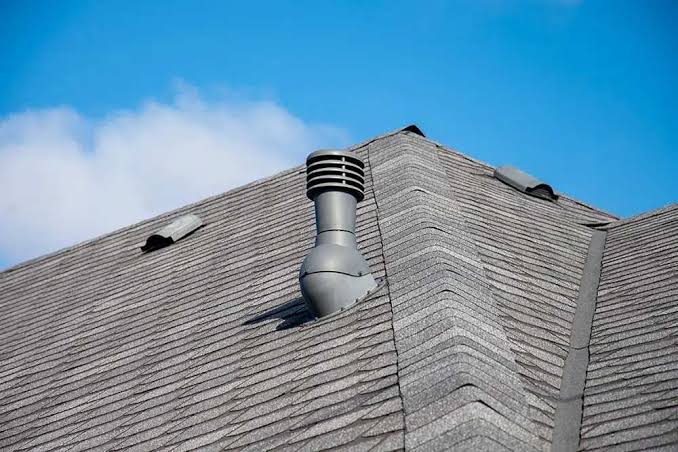
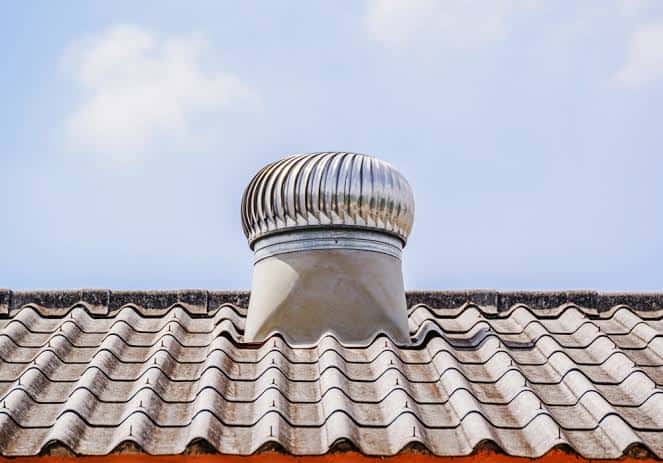
- Static or box vents (exhaust): Individual vents spaced across the upper roof slope; a solid option when a continuous ridge vent isn’t practical.
- Gable vents (exhaust): Vents mounted in the triangular wall at each end of the attic — common on older Bloomfield homes, though less effective on their own than a ridge-and-soffit system.
- Power attic fans (exhaust): Electric or solar-powered fans that actively pull air out of the attic; useful for problem attics, but they need matched intake or they can actually pull conditioned air up from the living space below.
How Much Ventilation Your Bloomfield Home Actually Needs
The building-industry rule of thumb is 1 square foot of net free ventilation area for every 150 square feet of attic floor space, split evenly between intake and exhaust — or 1:300 if the attic has a vapor barrier and balanced intake/exhaust already in place. For a typical 1,500-square-foot Bloomfield Cape or Colonial, that works out to roughly 10 square feet of total ventilation, or about 5 square feet each of intake and exhaust. In practice, this usually means a continuous soffit vent strip along the eaves paired with either a full-length ridge vent or a series of properly spaced static vents.
Permits and Bloomfield Township Requirements
Adding vents to an existing roof — soffit vents, ridge vents, or additional static vents — is typically considered a repair rather than a structural change, and often does not require a separate permit in most New Jersey municipalities. However, if ventilation work is done as part of a full roof replacement, that project does require a building permit under the New Jersey Uniform Construction Code, and the ventilation system is generally reviewed as part of that permit. It’s always worth confirming specifics with Bloomfield Township’s Building Department before work begins, particularly for larger jobs like power fan installations that involve new electrical work.
2026 Cost Ranges: Roof Ventilation Fixes in Bloomfield
Ventilation upgrades are some of the most cost-effective roofing improvements available, especially compared to the cost of premature shingle failure or ice-dam water damage:
| Project | Typical Bloomfield Price Range (2026) | Typical Timeline |
| Soffit vent install/repair (per section) | $250 – $700 | Half day |
| Ridge vent installation (full roof) | $650 – $1,800 | 1 day |
| Static (box) vent, each | $150 – $350 | Half day |
| Power attic fan installation | $450 – $950 | Half day |
| Full balanced ventilation retrofit (ridge + soffit) | $1,200 – $3,500 | 1 – 2 days |
| Ventilation upgrade bundled with roof replacement | Often $500 – $1,500 added to project | Same as roof job |
These are general planning ranges. Actual pricing depends on roof pitch, attic layout, and whether existing insulation is blocking soffit intake — all things we check during a free inspection.
How New Jersey’s Seasons Put Ventilation to the Test
Essex County summers regularly push attic temperatures well past 130 degrees in an unventilated space, baking shingles from underneath and driving up cooling costs. Winter brings the opposite challenge: heat escaping into the attic melts roof snow unevenly, and the refreeze at the colder eaves is exactly what builds the ice dams that force water back under the shingles. A roof that’s properly balanced for ventilation handles both extremes — staying closer to outdoor temperature in summer and cold enough in winter to prevent uneven snowmelt. It’s one system solving two very different seasonal problems.
A Simple Checklist Before You Call Anyone
- Check the attic on a hot afternoon — if it feels far hotter than outside, ventilation is likely inadequate.
- Look at the soffits from outside — are the vents actually open, or painted over/blocked by insulation?
- Check for a ridge vent, static vents, or gable vents, and note whether any are damaged or blocked.
- During or after winter, watch the eaves for ice dam buildup, especially over rooms with cathedral or finished ceilings.
- Look inside the attic on a cold morning for frost or condensation on the roof deck or nail tips.
- If your roof is due for replacement anyway, ask your contractor to include a full ventilation assessment as part of the scope.
- Get a free professional inspection — ventilation problems are often invisible from the ground and easy to miss without checking the attic directly.
Why Bloomfield Homeowners Call BlueSky Roofing & Siding
BlueSky Roofing & Siding Solutions has been family-owned and operated for over 45 years, serving homeowners throughout Essex County, including Bloomfield. Every free inspection includes a look inside the attic, not just a walk around the exterior, so ventilation problems get caught before they turn into a roof leak or premature roof replacement. We’re fully licensed and insured, and because we also handle gutters, we can address ice dam and overflow issues at the same time if your eaves need attention.
Browse recent roofing projects in our project gallery, read what neighbors across Essex and Passaic Counties have said in our customer reviews, or learn more about our team on our About Us page.
Frequently Asked Questions
How do I know if my roof ventilation is bad?
The clearest signs are a noticeably hot attic in summer, ice dams along the eaves in winter, curling or blistering shingles, and a musty smell near the attic hatch. Frost or condensation on the underside of the roof deck on a cold morning is another strong indicator.
How much does it cost to add roof ventilation in NJ?
Individual fixes like soffit vents or static vents typically run $150 to $700. A full balanced retrofit combining ridge and soffit ventilation generally costs $1,200 to $3,500, and is often significantly cheaper when done as part of a planned roof replacement rather than as a standalone project.
Can too much attic ventilation be a problem?
It’s less common than too little, but yes — exhaust vents without matching intake can pull conditioned air from the living space up into the attic, and improperly balanced power fans can even pull air back down through roof shingles in some conditions. The goal is always balance between intake and exhaust, not maximum airflow.
Does roof ventilation affect my shingle warranty?
Often, yes. Most major shingle manufacturers require attic ventilation that meets building code minimums as a condition of the warranty. A roof installed without adequate ventilation can void manufacturer coverage even if the shingles themselves are high quality.
Do I need a permit to add soffit or ridge vents in Bloomfield?
Adding vents to an existing roof is typically treated as a repair and often doesn’t require a standalone permit, but ventilation work bundled into a full roof replacement is covered under that project’s building permit. Confirm details with Bloomfield Township’s Building Department for your specific project.
Will better attic ventilation lower my energy bills?
It can meaningfully reduce summer cooling costs by preventing a superheated attic from radiating heat into the rooms below, and it helps prevent the moisture damage that leads to costly repairs. It’s not a replacement for proper attic insulation, but the two work together — ventilation controls airflow and moisture, insulation controls heat transfer.
Get a Free Roof & Attic Inspection in Bloomfield
If your attic runs hot in summer or you dealt with ice dams last winter, the fastest way to find out what’s really going on is a free, no-obligation inspection. We’ll check your attic, your soffits, and your roofline, and explain exactly what’s needed in plain language — no pressure, no upselling. Request your free estimate or call (201) 686-1059 to schedule.

