
By BlueSky Roofing & Siding Solutions · NJ Lic. #13VH13982000
Every winter, the same kind of call comes in from Sussex County. Water is dripping from a ceiling near an outside wall, the roof is still covered in snow, and a thick ridge of ice is hanging off the gutters. That ridge is an ice dam, and in Sparta it’s one of the most common causes of winter roof leaks.
Ice dam prevention in Sparta, NJ comes down to three things: keeping household heat out of the attic, keeping cold air moving under the roof deck, and protecting the bottom edge of the roof with the right underlayment. This guide explains why Sparta homes are more exposed than most of New Jersey, which prevention steps actually work, how to handle an ice dam that has already formed, and what removal and repairs typically cost.
Quick answer: Ice dams form when heat escaping into the attic melts the snow on your roof and that water refreezes at the cold eaves. The most effective ice dam prevention for Sparta homes is (1) air sealing and insulating the attic floor, (2) balanced soffit-and-ridge ventilation, and (3) ice barrier underlayment at the eaves, which New Jersey’s code specifically requires in Sussex County. Clean gutters and roof raking help, but they don’t fix the cause.
Why Sparta Roofs Get More Ice Dams Than Most of New Jersey
Sparta isn’t just a little colder than Clifton or Newark. The township sits in the New Jersey Highlands. Its official elevation is about 620 feet, and many ridges and hillside streets sit well above that. Higher ground means colder nights, snow that stays on roofs longer, and more freeze-thaw cycles every winter.
Sussex County is New Jersey’s official “ice barrier” county
The state building code doesn’t treat all of New Jersey the same when it comes to ice. NJ Department of Community Affairs Bulletin 07-3 explains that an ice dam membrane (ice barrier) is required where the average daily temperature in January is 25°F or less. The bulletin is direct about where that is: “For the State of New Jersey, this area is Sussex County.”
In other words, Sparta is the one part of the state where the code itself assumes ice dams will happen. If your roof doesn’t have that protection, your home is more vulnerable than the code intends.
More snow, and it sits on the roof longer
Sussex County’s hazard mitigation planning puts normal seasonal snowfall in New Jersey at about 15 inches in Cape May County and over 40 inches in Sussex County. Snow that lingers on a roof for a week or more is the raw material for an ice dam. One storm that melts off in two days rarely causes trouble. A cold stretch after a heavy snowfall almost always does.
Lake Mohawk’s converted summer cottages
Lake Mohawk was created in 1926, when a dam was built across the Wallkill River, and the lake filled by 1928. The community was built mainly as summer homes. Owners began winterizing them in the 1940s, and today most of the roughly 2,600 member families live there year-round.
Many of those houses have been renovated and expanded, but their original attics, knee walls, and low-slope additions were never designed to hold heat in a Highlands winter. Thin insulation, unsealed attic floors, and cathedral ceilings with no room for airflow are classic ice dam generators. If you own an older lake home in Sparta, it’s worth checking the attic before the first big storm.
Shade, tall trees, and north-facing slopes
Wooded lots around Lake Mohawk, Upper Mohawk, and the hillside neighborhoods off Route 517 and Route 181 keep parts of many roofs shaded all day. The sunny side of the roof melts while the shaded eave stays frozen. That temperature split is exactly what builds a dam.
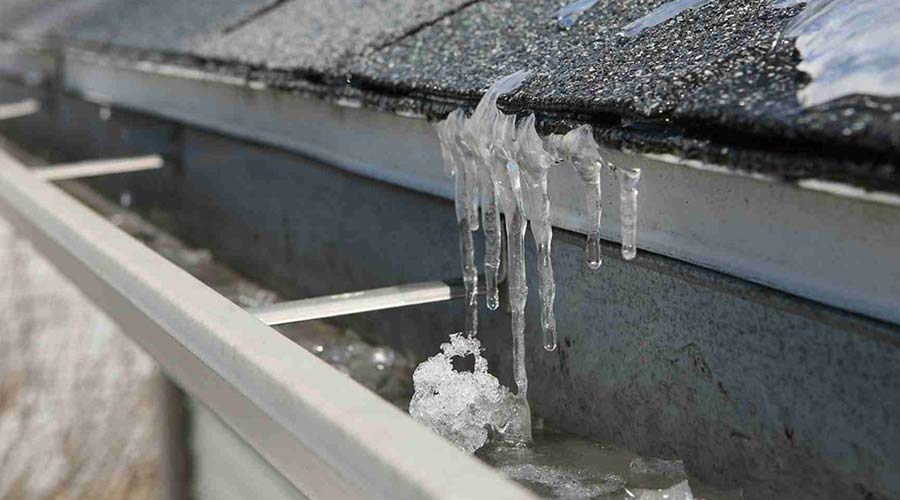
How an Ice Dam Forms, Step by Step
Understanding the cause makes the fixes obvious. Here’s what happens on a typical Sparta roof:
- Snow covers the roof after a storm.
- Heat from the living space leaks into the attic and warms the roof deck above 32°F, even though the outdoor air is well below freezing.
- Snow touching the warm deck melts and runs downhill under the blanket of snow above it.
- When that water reaches the eaves, it hits the part of the roof that hangs past the heated walls. That overhang is as cold as the outside air, so the water refreezes.
- The ice ridge grows with every melt-and-freeze cycle. Water then pools behind it, works its way under the shingles, and leaks into the wall or ceiling.
The key takeaway: an ice dam is a heat problem first and a roof problem second. That’s why chipping ice, adding heat cables, or installing gutter guards only treats the symptoms.
Warning Signs of Ice Dams on Sparta Homes
Ice dams don’t always announce themselves with a leak. Watch for these signs from December through March:
- Thick icicles hanging from the gutters, especially above entrances and windows
- A solid ridge of ice along the roof edge with snow piled behind it
- Water stains or peeling paint on ceilings near exterior walls
- Damp drywall or bubbling paint around the tops of upstairs windows
- Frost on the tips of roofing nails in the attic, or damp, matted insulation
- Bare patches on the upper roof while snow stays put on the lower roof, a sign heat is escaping
- Gutters bending or pulling away from the fascia under the weight of ice
If you spot any of these, take photos inside and out. They help a roofer track down the heat leak, and they’re useful if you need to file an insurance claim.
Ice Dam Prevention: What Actually Works
Here’s the order we recommend for Sparta homeowners. The first four steps fix or block the cause. The last three manage symptoms.
1. Air seal the attic floor
Most attic heat doesn’t move through insulation. It rides warm air through gaps in the ceiling below. The usual leaks are recessed lights, bathroom fans that dump into the attic instead of venting outdoors, attic hatches and pull-down stairs, holes around plumbing and wiring, chimney chases, and the tops of interior walls.
Sealing those gaps is usually the single most effective ice dam prevention step, and it lowers your heating bill at the same time.
2. Bring attic insulation up to today’s recommendations
Sussex County falls in Climate Zone 5A under New Jersey’s energy code. For that zone, the ENERGY STAR insulation chart recommends about R-60 for an uninsulated attic, or topping up to R-49 if the attic already has 3 to 4 inches. Many older Sparta homes have far less than that.
One caution: when insulation is added, the soffit vents must stay open. Baffles (vent chutes) between the rafters keep a clear air channel from the eaves into the attic.
3. Balance your attic ventilation
The goal is a cold roof deck. Outside air should enter through soffit vents at the eaves, travel up under the roof deck, and exit through a ridge vent. That airflow carries away any heat that does sneak through, so snow doesn’t melt from below.
Mixed systems with a ridge vent, gable vents, and box vents all on one roof can short-circuit the airflow and leave the lower roof warm. If your attic smells musty, has frosty nails, or your upstairs is hot in summer, read our guide on signs your roof ventilation isn’t working. The same problems drive ice dams in winter.
4. Install ice barrier underlayment at the eaves
Ice barrier is a self-adhering waterproof membrane installed under the shingles. Under the model residential code (IRC R905.1.2), it runs from the roof edge to at least 24 inches inside the exterior wall line. It should also go in valleys and around chimneys and skylights.
Ice barrier doesn’t stop ice dams from forming. It stops the water trapped behind them from getting into your house. Many Sparta roofs installed decades ago have none, or just one narrow strip. The only practical way to add it is during a roof replacement or an eave rebuild, which is why it’s a key line item in any roof replacement in Sussex County.
5. Clear gutters and downspouts before winter
Gutters don’t cause ice dams, but gutters packed with wet leaves freeze solid, add weight to the roof edge, and give the ice a head start. Clean them after most of the leaves have dropped in late fall. Our guide to how often to clean your gutters covers timing for wooded lots. And if you’re weighing guards, see gutter guards vs. gutter replacement. Guards reduce clogs, but they won’t stop ice dams.
6. Rake the roof after big storms
A long-handled roof rake lets you pull snow off the bottom three to four feet of the roof while standing on the ground. Do it after any storm of six inches or more. Leave an inch or so of snow on the shingles so you don’t scrape off granules, and never climb onto a snowy roof.

7. Use heat cables only as a targeted backup
Heat cables can keep a drainage channel open in a chronic trouble spot, like a valley above a front door or a low-slope porch roof. But they use electricity, wear out, and do nothing about the heat leak that causes the dam. If you use them, install them per the manufacturer’s instructions on a GFCI-protected circuit.
| Prevention method | Fixes the cause? | Cost level | Best for |
|---|---|---|---|
| Attic air sealing | Yes | Low to moderate | Nearly every Sparta home |
| Adding insulation | Yes | Moderate | Older homes and converted lake cottages |
| Soffit + ridge ventilation | Yes | Moderate | Attics with frost, damp insulation, or summer heat |
| Ice barrier underlayment | Blocks leaks (doesn’t prevent ice) | Done with a re-roof | Roofs being replaced or older roofs without it |
| Gutter cleaning | Partly | Low | Every fall |
| Roof raking | Short-term only | Low | After storms of 6″+ |
| Heat cables | Short-term only | Low to moderate | One or two chronic problem spots |
Already Have an Ice Dam? What to Do (and What Not to Do)
If an ice dam has already formed and water is coming in, the priority is limiting interior damage without creating a bigger roof problem.
Do
- Pull snow off the lower roof with a roof rake from the ground so less meltwater feeds the dam.
- If you can reach safely from the ground, lay a nylon stocking filled with calcium chloride ice melt across the dam to melt a drainage channel. Use calcium chloride, not rock salt.
- Catch drips inside with towels and buckets, and move furniture and electronics away from the leak.
- Photograph the ice, the stains, and any damage for your insurance company.
- Call for emergency roofing in Sussex County if water is actively coming through a ceiling or light fixture.
Don’t
- Don’t chop at the ice with a hammer, axe, or shovel. It cracks shingles and tears gutters off.
- Don’t use rock salt. Sodium chloride damages shingles, metal flashing, and plants below.
- Don’t climb a ladder onto an icy roof. Ladder falls are one of the most common winter home-maintenance injuries.
- Don’t use a pressure washer, torch, or heat gun on the roof.
- Don’t assume the problem is over when the ice melts. Water may have soaked the insulation and roof sheathing, which can lead to rot and mold.

How Much Does Ice Dam Removal Cost in Sparta?
Professional ice dam removal is usually done with low-pressure steam, which melts the ice without damaging the shingles. National cost guides from Fixr and Angi put steam removal at roughly $300 to $600 per hour, and many companies have a two-hour minimum. A typical job lands somewhere around $600 to $2,000, depending on roof size, height, pitch, and ice thickness. After a big Sussex County storm, demand spikes and wait times stretch.
Removal is only part of the bill. Interior damage, such as stained drywall, wet insulation, repainting, and possible mold cleanup, often costs more than the removal itself. That’s why prevention work done in the fall is usually the better investment.
Will homeowners insurance cover ice dam damage?
Many homeowners policies cover sudden interior water damage caused by an ice dam. Coverage for removing the ice itself, or for damage an insurer considers long-term neglect, varies. Read your policy, document everything early, and get the leak repaired promptly so the damage doesn’t grow. A professional roof leak repair report showing the cause can help support your claim.
When Ice Dams Mean Your Roof Needs More Than Maintenance
Sometimes ice dams expose a roof that’s simply at the end of its life. These are the signs that point toward replacement rather than another winter of patching:
- The roof is 20 years or older and has little or no ice barrier at the eaves.
- The decking along the eaves feels soft, or the overhang shows dark stains and rot.
- You get leaks in the same spot every winter, even after repairs.
- Shingles near the eaves are curled, cracked, or losing granules.
- The roof already has two layers of shingles, so a third layer can’t legally be added and a full tear-off is needed.
- Flashing around the chimney, vents, or skylights is rusted or loose. Our guide to roof flashing repair in New Jersey explains what to look for.
For a full checklist, see our post on the signs you need a new roof. A new roof built for Sussex County should include ice barrier at the eaves and valleys, new flashing, a drip edge, and a balanced ventilation plan, not just new shingles.
Do you need a permit for a new roof in Sparta?
Under N.J.A.C. 5:23-2.7, repairing or replacing the existing roof covering on a detached one- or two-family home is treated as ordinary maintenance, so a construction permit generally isn’t required. Work that affects the structure, such as replacing rafters or major decking, and roofs on attached homes like townhouses can be different. Either way, the work still has to meet code, including the Sussex County ice barrier requirement. If your project includes structural work, check with the Township of Sparta construction office before work starts.
Fall Ice Dam Prevention Checklist for Sparta Homeowners
Work through this list between October and Thanksgiving, before the ground and gutters freeze:
- Look in the attic on a cold morning. Frost on nail tips or damp insulation means warm, moist air is leaking in.
- Confirm that bathroom and kitchen fans vent outdoors, not into the attic.
- Check insulation depth. If you can see the tops of the ceiling joists, you almost certainly need more.
- Make sure soffit vents aren’t blocked by insulation, paint, or old screens.
- Clean gutters and downspouts after the leaves drop, and make sure downspouts discharge away from the foundation.
- Buy a roof rake before the first storm. They sell out quickly once snow is in the forecast.
- Schedule a professional roof inspection that includes the attic, eaves, flashing, and ventilation.
Frequently Asked Questions About Ice Dams in Sparta, NJ
What is the fastest way to prevent ice dams?
In the short term, rake the bottom few feet of snow off the roof after every big storm. The fastest long-term fix is air sealing the attic floor, because it stops the warm air that melts the snow in the first place. Most homes can have air sealing done in a day.
Do gutter guards prevent ice dams?
No. Gutter guards keep leaves out, but ice dams form on the roof surface above the gutters. Guards can reduce how much ice builds up inside the gutter, but the dam itself is caused by heat loss from the attic.
Are heat cables worth it in Sussex County?
Heat cables can help in one or two chronic trouble spots, such as a valley over an entry door. They aren’t a whole-roof solution, and they don’t address the cause. Spending the same money on air sealing usually does more.
Will a new roof stop ice dams?
A new roof with ice barrier at the eaves and proper ventilation will stop most ice dam leaks and reduce ice buildup. But if heat is still pouring into the attic, ice can still form. The best results come from pairing a new roof with attic air sealing and insulation.
Why do I get icicles but no leaks?
Icicles mean meltwater is reaching the roof edge and refreezing, which is an early warning sign. You may not have leaks yet because your ice barrier is doing its job, or because the dams haven’t grown large enough. It’s still a signal that heat is escaping.
Is ice dam damage covered by insurance in New Jersey?
Often the sudden interior water damage is covered, but policies vary, and the removal itself may not be. Document the damage with photos, stop the leak quickly, and call your insurer to confirm what your policy includes.
When should Sparta homeowners schedule ice dam prevention work?
September through November is ideal. Attic work is easier before it’s freezing, and roofing materials seal best in milder temperatures. Once snow is on the roof, you’re limited to emergency fixes.
Get an Ice Dam Inspection in Sparta, NJ
BlueSky Roofing & Siding Solutions is a family-owned roofing contractor with over 45 years of experience, based in Clifton and serving Sparta and all of Sussex County. Our free inspection looks at the whole system: the attic, insulation, ventilation, eaves, flashing, and the condition of your shingles. You’ll get an honest recommendation, whether that’s a simple air sealing fix, a roof leak repair in Sussex County, or a full roof replacement.
Water coming through the ceiling right now? Call (201) 686-1059. We offer 24/7 emergency roofing service.
Planning a new roof before winter? Ask about our $1,000 off a qualifying new roof coupon. Mention it before you sign your project agreement.
BlueSky Roofing & Siding Solutions · 310 Colfax Ave, Clifton, NJ 07013 · (201) 686-1059 · Request a free estimate

