
If your gutters leak at the joints, sag after heavy rain, overflow even when they are clean, or pull away from the fascia, you may be wondering whether it is time to replace them. For many homeowners in Union, New Jersey, seamless gutters are one of the most practical upgrades to consider because they reduce the number of joints in the drainage system and can be fabricated to fit the exact dimensions of the home.
But seamless gutters are not automatically the right answer for every property. A good installation still depends on correct sizing, pitch, hanger spacing, downspout placement, fascia condition, and how much water the roof sends into each gutter run. The real question is not simply whether seamless gutters are “better.” It is whether a properly designed seamless system will solve the drainage problems your Union home actually has.
This guide explains what seamless gutters are, how they differ from sectional systems, what they typically cost, when replacement makes sense, and what Union Township homeowners should check before approving a new installation.
Quick Answer: Are Seamless Gutters Worth It in Union, NJ?
For most homes that need full gutter replacement, seamless aluminum gutters are usually worth considering. They use long continuous sections formed for the home, which means fewer field joints than traditional sectional gutters. Fewer joints can mean fewer potential leak points, a cleaner exterior appearance, and a system that is easier to tailor to the roofline.
The upgrade is most valuable when your existing gutters are aging, leaking at multiple seams, sagging, poorly pitched, undersized, or repeatedly overflowing during New Jersey storms. If the existing gutter system is structurally sound and only has one small repairable defect, full replacement may not be necessary.
BlueSky Roofing & Siding lists seamless aluminum as a standard gutter-installation option on its Union County service page, with a published planning range of roughly $8-$14 per linear foot. Actual project pricing depends on the house, access, downspouts, gutter size, fascia condition, removal of old materials, and other site-specific details.
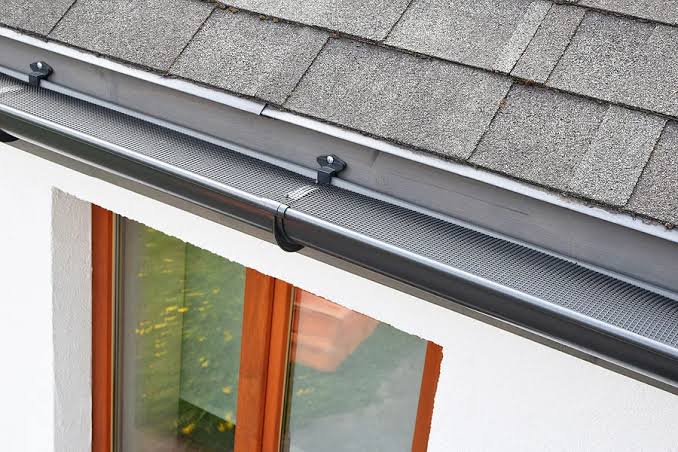
Why Gutters Matter So Much on Union, NJ Homes
Gutters have a simple job: collect water from the roof and move it away from the structure. When that job is done correctly, the system helps protect the roof edge, fascia, siding, masonry, walkways, landscaping, and foundation area from repeated runoff.
Union Township has the same four-season weather patterns that make exterior drainage important across northern and central New Jersey. Spring rain, summer thunderstorms, autumn leaves, winter snow, and freeze-thaw cycles all place stress on roof drainage. A system that works reasonably well in light rain can still fail when a roof valley concentrates water into one short gutter section or when leaves slow the outlets during fall.
Older homes can add another complication. Rooflines may have been altered, additions may drain into existing sections, and older gutters may have been repaired multiple times without correcting the original pitch or downspout layout. That is why a new gutter project should be treated as a drainage design problem, not just a metal-replacement project.
What Are Seamless Gutters?
Seamless gutters are made from a continuous coil of gutter material that is formed on-site with a gutter machine. The installer measures the roof edge and produces long runs that match the home. Joints are still required at certain locations, such as inside and outside corners, end caps, and downspout outlets, but there are far fewer joints along straight sections.
Traditional sectional gutters, by comparison, are assembled from shorter factory-made pieces. Every connection between those pieces needs to be joined and sealed. Those joints can perform well when installed correctly, but each one is another place that may eventually loosen, separate, or require resealing.
For residential work, seamless aluminum is common because it is relatively lightweight, corrosion-resistant, available in many colors, and practical to custom-form at the property.
Seamless Gutters vs. Sectional Gutters
The difference is not that seamless systems have zero seams. The important difference is that long straight runs usually do not require multiple field seams.
Seamless gutters generally offer:
Fewer joints along straight gutter runs
A cleaner, more continuous appearance
Custom fabrication to the home’s measured roofline
Fewer joint locations that may need future resealing
Easy pairing with new downspouts and hidden hangers
Sectional gutters can still make sense for very small projects, isolated repairs, or certain DIY situations. But for a full professional replacement, seamless construction usually creates a simpler drainage path with fewer connection points.
The quality of the installation matters more than the word “seamless.” A seamless gutter installed with poor pitch, too few downspouts, weak fasteners, or incorrect sizing can still overflow or fail.
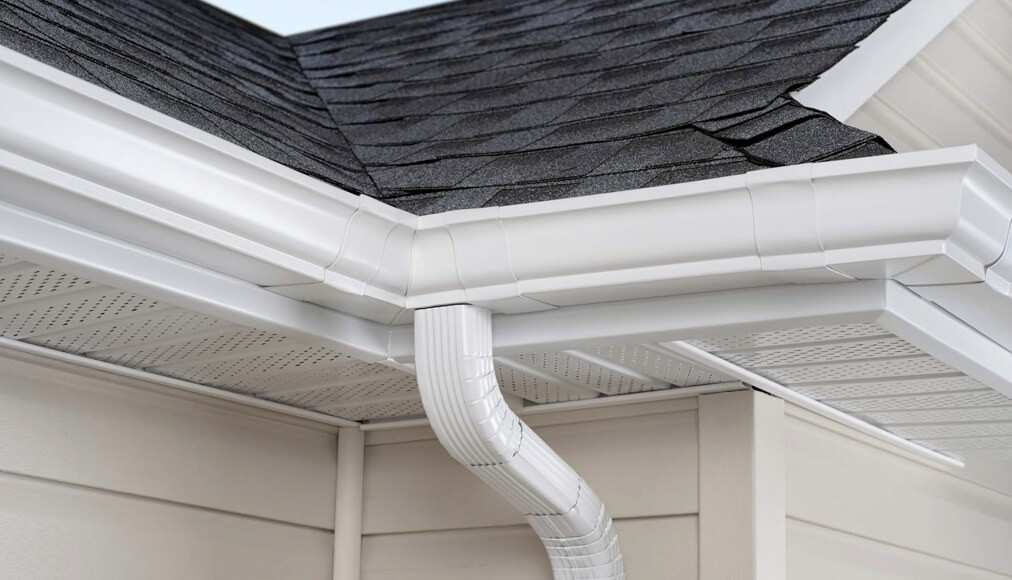
7 Signs Your Union Home May Need New Gutters
1. Water leaks from several gutter joints
One leaking seam can often be repaired. Multiple leaking joints usually indicate that the system is aging or that sealant and connections are failing throughout the run. If you are paying to reseal the same gutters repeatedly, replacement becomes easier to justify.
2. Gutters sag or hold standing water
A gutter should be pitched so water travels toward the outlet. If sections sag between hangers or remain full after the rain stops, the system may have poor pitch, loose fasteners, inadequate support, or deformation.
3. Gutters are pulling away from the fascia
This can happen when hangers loosen, fasteners fail, heavy debris loads stress the gutter, or the fascia behind the gutter has deteriorated. Reattaching a gutter to damaged wood does not solve the underlying issue. The fascia should be evaluated before new gutters are installed.
4. Clean gutters still overflow
Overflow does not always mean the gutter is clogged. A clean gutter can overflow because it is too small for the roof area, because a roof valley dumps too much water into one point, because the downspout is undersized, or because the outlet layout is inadequate.
5. You see water staining on siding or fascia
Dark streaks, peeling paint, softened wood, algae growth, or water marks below the gutter line can indicate that runoff is escaping behind or over the system.
6. Water collects near the foundation
Downspouts need to move water away from the home. If runoff exits beside the foundation or repeatedly creates pooling at the base of the house, extensions or drainage changes may be required in addition to new gutters.
7. The system has become a patchwork of repairs
A few local repairs are normal over a gutter’s service life. But if sections are bent, joints are heavily sealed, fasteners are mismatched, and multiple areas have been patched, a full system replacement may provide a more reliable result.
Is Seamless Gutter Installation Worth the Upgrade?
For a homeowner already facing full gutter replacement, the biggest advantage is not luxury or appearance. A seamless run has fewer joints, and fewer joints mean fewer connection points that can become maintenance issues later.
That can be especially useful on long roof edges. A sectional system may require several connections across the same span, while a seamless system can often cover that distance with one continuous piece.
The upgrade can also improve the appearance of the roofline because the gutters are measured and formed for the house. New hidden hangers can reduce the visual clutter of older spike-and-ferrule systems, while properly planned downspouts can make the exterior look more intentional.
However, the value depends on correcting the entire drainage design. If the old gutters overflow because the downspouts are too small or too few, installing the same layout in seamless material will reproduce the same problem.
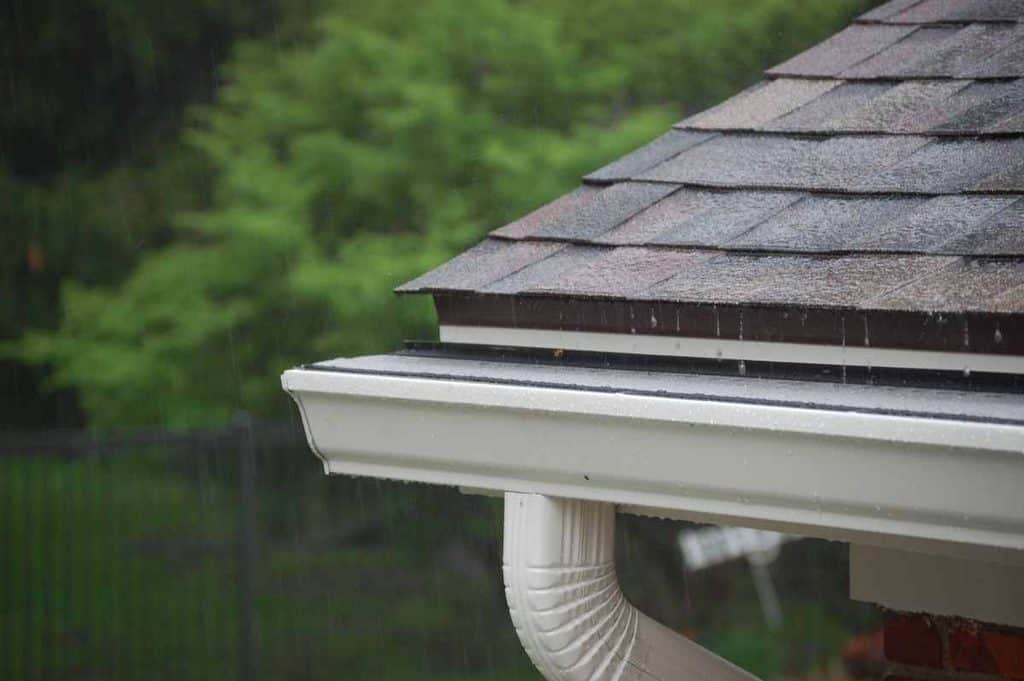
What Size Gutters Are Best for a Home in Union?
Many residential homes use 5-inch or 6-inch K-style gutters, but the correct size depends on more than the town or the square footage of the house. Roof area, roof pitch, valleys, the length of the gutter run, rainfall intensity, and downspout capacity all affect performance.
A 5-inch gutter may work well on a straightforward roof with moderate drainage demands. A 6-inch system offers more capacity and can be useful on larger or steeper roof sections, long runs, complex rooflines, or areas where valleys concentrate water.
Bigger is not always automatically better. The important point is that the gutter and downspout system should be sized together.
If your current gutters overflow during storms even after they have been cleaned, ask the contractor to evaluate capacity and outlet placement instead of simply replacing the same size.
Why Downspout Placement Is Just as Important as the Gutters
Homeowners often focus on the gutter trough and overlook the downspouts. But the gutter can only move water as fast as the outlets allow it to leave.
A long run with one undersized downspout may fill faster than it can drain. Water then rises and spills over the edge, especially near roof valleys. Adding or relocating a downspout can sometimes improve performance more than increasing gutter size alone.
The discharge point matters too. Downspouts should direct runoff away from the foundation and away from areas where water can flow back toward the home. Splash blocks or extensions may be appropriate depending on the property.
During a seamless gutter installation in Union, the contractor should evaluate both collection and discharge. A system is only successful if water reaches the ground and continues moving away from the structure.
How Seamless Gutters Are Installed
Step 1: Inspect the existing drainage system
The contractor should identify why the current gutters are being replaced. This includes looking for leaks, sagging, incorrect pitch, overflow locations, damaged fascia, poor downspout placement, and evidence of water behind the gutter.
Step 2: Measure each roof edge
The home is measured so the new gutter runs can be formed to the correct length.
Step 3: Evaluate fascia and roof-edge condition
New gutters need a sound attachment surface. Rotted or badly deteriorated fascia should be repaired before the new system is fastened in place.
Step 4: Form the gutter on-site
Coiled aluminum is fed through a gutter machine and shaped into a continuous run. The piece can then be cut to the exact measurement needed for that section of the home.
Step 5: Establish the proper pitch
The gutter is installed with a slight slope toward the outlet so water drains efficiently. Too little slope can leave standing water. Poorly planned slope can also create an uneven appearance or send water in the wrong direction.
Step 6: Install hangers and outlets
Hidden hangers secure the gutter to the fascia. Outlet locations are cut for the downspouts, and the installer connects elbows and vertical sections based on the drainage plan.
Step 7: Test drainage and complete cleanup
The finished system should be checked for flow, alignment, secure attachment, and correct discharge.
What Can Go Wrong With a Bad Gutter Installation?
A seamless product does not protect you from poor workmanship. Common installation problems include improper pitch, inadequate hangers, fasteners attached to weak fascia, too few downspouts, undersized outlets, poorly sealed corners, downspouts discharging beside the foundation, and gutters positioned incorrectly relative to the roof edge.
Another common mistake is treating every roof section the same. A roof valley can direct a large amount of runoff to a small area. That section may need greater capacity, better outlet placement, or a different drainage detail.
This is one reason to choose a contractor that works on the entire exterior system. BlueSky’s gutter services are part of a broader roofing and exterior scope, which allows roof-edge drainage, fascia, flashing, and the gutter system to be evaluated together.
How Much Does Seamless Gutter Installation Cost in Union, NJ?
BlueSky currently publishes a typical gutter installation range of approximately $8-$14 per linear foot on its Union County roofing and exterior services page, with seamless aluminum described as standard. That figure is best treated as a planning range rather than a fixed quote.
The final price can change based on:
Total linear footage
One-story vs. multi-story access
5-inch vs. 6-inch gutter size
Number and size of downspouts
Number of inside and outside corners
Fascia repair or replacement
Removal and disposal of existing gutters
Gutter guard installation
Difficult access around decks, additions, landscaping, or neighboring structures
Custom drainage details
When comparing estimates, make sure you are comparing the complete system. One quote may include downspouts, removal, hidden hangers, extensions, and cleanup while another lists those items separately.
A lower per-foot number is not necessarily a better value if the system is undersized or important components are treated as add-ons.
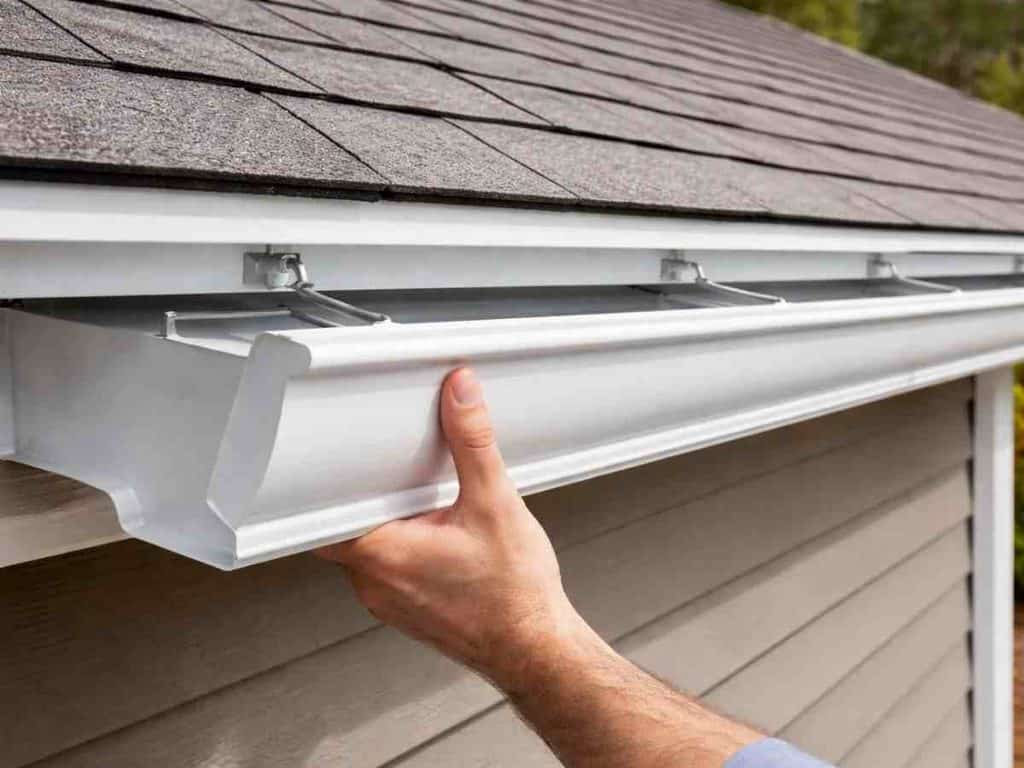
Should You Install Gutter Guards With New Seamless Gutters?
Gutter guards can be useful when the new gutter system is properly sized and installed but the home receives frequent leaves, seeds, twigs, or other debris.
They should not be used as a substitute for a failing gutter system. If gutters sag, leak, hold standing water, or overflow because they are too small, adding guards will not correct those problems.
BlueSky’s guide on gutter guards vs. gutter replacement explains this distinction in detail. In simple terms, guards protect a healthy drainage system from debris. Replacement corrects problems with the drainage system itself.
For some Union homeowners, installing new seamless gutters and compatible guards at the same time can reduce future maintenance. The right choice depends on the trees around the property, roof layout, guard design, and how accessible the gutters are for periodic cleaning.
What About Ice, Snow, and Winter Conditions?
Gutters in New Jersey have to handle more than summer rain. Winter temperatures can create freeze-thaw cycles at the roof edge, and snowmelt can move into gutters before refreezing.
A gutter system should be secure enough to handle seasonal loads, but gutters are not designed to solve ice-dam problems by themselves. Ice dams are usually related to heat loss, roof temperature, snow cover, and roof-edge conditions.
If winter water is backing up beneath roofing materials, the roof system should be inspected in addition to the gutters. In some cases, homeowners planning roof replacement in Union County choose to coordinate the roofing and gutter work so the roof edge, drip edge, fascia, and drainage system can all be addressed in the correct sequence.
Should Gutters Be Replaced at the Same Time as the Roof?
Not always, but the timing can be convenient.
If the gutters are old and already near the end of their useful life, replacing them around the same time as a roof can reduce repeated setup and allow the contractor to coordinate the roof edge properly.
If the gutters are relatively new, securely attached, correctly pitched, and functioning well, there may be no reason to replace them just because the roof is being replaced.
The important detail is sequencing. Roof work can involve drip edge and fascia areas immediately adjacent to the gutter. A contractor should determine whether existing gutters can remain in place without interfering with the roofing work or being damaged.
How Long Do Seamless Aluminum Gutters Last?
There is no single lifespan that applies to every house. Service life depends on material thickness, installation quality, maintenance, tree debris, fastener condition, physical damage, and whether water is allowed to sit in the gutter.
A well-installed system that is cleaned when necessary and keeps water moving can remain functional for many years. Poor pitch, clogged outlets, damaged fascia, or frequent impact can shorten that life considerably.
Instead of replacing gutters based only on age, evaluate how the system is performing. Straight, secure gutters that drain correctly are very different from gutters of the same age that leak and sag.
How to Choose a Gutter Contractor in Union, NJ
Ask the contractor to explain why your current system is failing and how the proposed design fixes that problem.
A useful estimate should clearly identify gutter material and size, total footage, downspout quantity and size, hanger type, removal of existing gutters, fascia repairs if required, discharge details, optional guard systems, cleanup, and warranty terms.
Also ask whether the contractor will inspect the roof edge. Water behind gutters can sometimes come from roofing or flashing issues rather than from the gutter itself.
BlueSky Roofing & Siding is a licensed and insured New Jersey exterior contractor and provides roofing, gutter, siding, chimney, and masonry work. Its Union County page includes gutter installation among the exterior services offered in the area.
Questions to Ask Before Signing a Gutter Installation Estimate
What size gutter are you recommending, and why?
How many downspouts will the system have?
Are the downspouts sized for the gutter and roof area?
Will you inspect the fascia before installing new gutters?
Are hidden hangers included?
How will the gutters be pitched?
Where will each downspout discharge?
Does the estimate include removal and disposal of the old system?
Are corners, outlets, end caps, elbows, and extensions included?
Are gutter guards included or priced separately?
What warranty applies to workmanship and materials?
The answers should be specific to your house, not generic.
Frequently Asked Questions About Seamless Gutters in Union, NJ
Are seamless gutters completely seamless?
No. Long straight runs are typically continuous, but joints are still needed at corners, end caps, outlets, and some transitions. The advantage is that there are usually far fewer seams than with sectional gutters.
Are seamless gutters better than regular gutters?
For full professional replacement, seamless gutters are often preferred because they reduce the number of field joints and are custom-fabricated to the house. But correct sizing, pitch, hangers, and downspouts are still essential.
What is the most common seamless gutter material?
Aluminum is one of the most common residential options because it is lightweight, corrosion-resistant, widely available, and can be formed on-site.
Do I need 5-inch or 6-inch gutters?
It depends on roof size, pitch, drainage concentration, gutter run length, and downspout capacity. Homes with larger or steeper roof areas may benefit from 6-inch gutters, but the contractor should size the complete system rather than recommending a larger gutter automatically.
Why do my gutters overflow even when they are clean?
Possible causes include inadequate gutter capacity, poor pitch, too few downspouts, small outlets, roof valleys concentrating water into one section, or a drainage layout that cannot move water away quickly enough.
Can seamless gutters be repaired?
Yes. Localized damage, loose hangers, certain corner leaks, outlets, and downspout issues may be repairable. Replacement becomes more sensible when the system has widespread damage, repeated leaks, poor pitch, or inadequate capacity.
How much do new gutters cost in Union, NJ?
BlueSky lists a general Union County planning range of about $8-$14 per linear foot for gutter installation, with seamless aluminum standard. Your final price depends on the actual property, system size, access, downspouts, corners, fascia condition, and project scope.
Are gutter guards worth adding?
They can be useful when the gutters are already functioning correctly and the main problem is frequent debris. They are not a substitute for sagging, leaking, poorly sized, or badly pitched gutters.
Get a Seamless Gutter Estimate in Union, NJ
If your gutters are leaking at multiple seams, sagging, pulling away from the house, or overflowing despite regular cleaning, replacing the old system with properly sized seamless gutters may be a worthwhile upgrade.
The best result comes from looking at the entire drainage path: roof runoff, gutter size, pitch, hangers, outlets, downspouts, fascia condition, and where water is discharged at ground level.
BlueSky Roofing & Siding provides gutter and exterior services throughout Union County and offers free estimates. Learn more about BlueSky’s gutter services, review its Union County roofing and exterior services, or call (201) 686-1059 to discuss seamless gutter installation for your Union, NJ home.

