
A roof leak in Hoboken can be harder to diagnose than it looks. You may notice a brown stain on a top-floor ceiling after a storm, damp paint along an exterior wall, or a musty smell near the roofline, yet the opening in the roof may be several feet away. Water can travel across decking, along joists, behind parapet walls, or beneath a roofing membrane before it finally becomes visible inside.
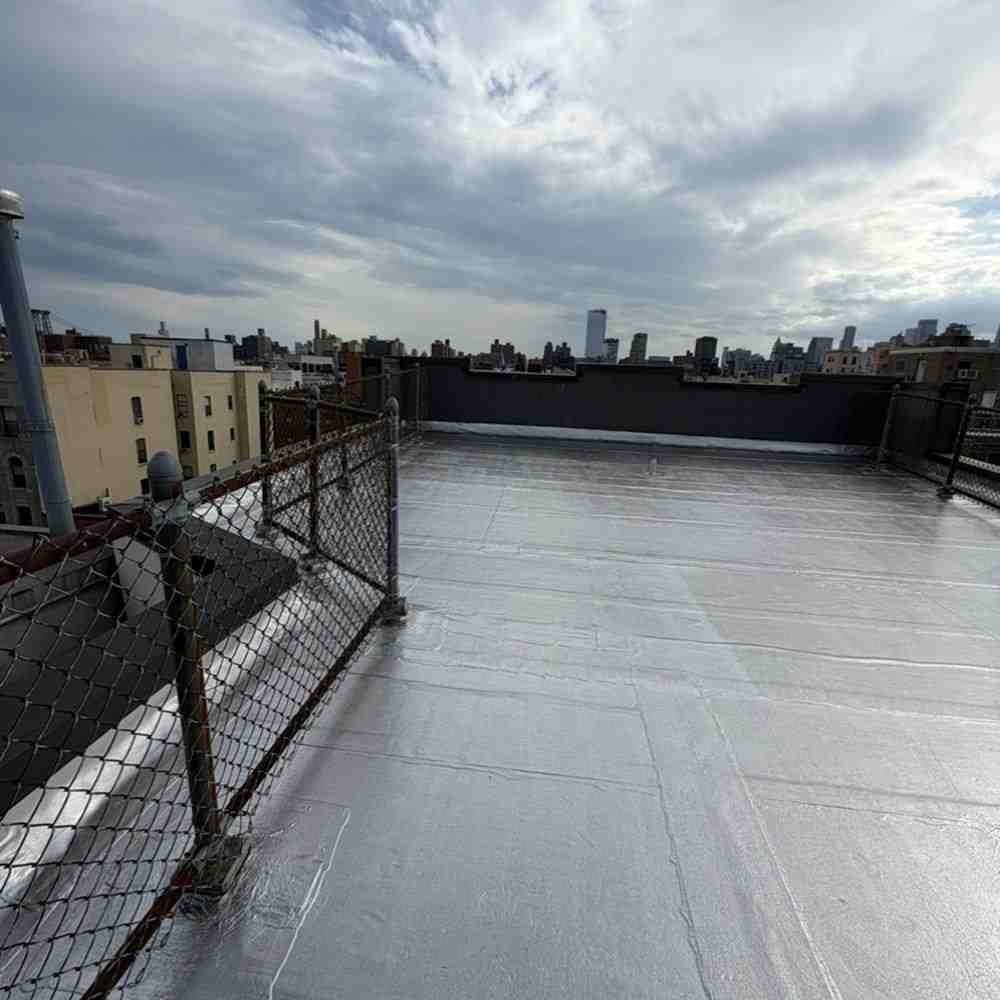
That matters in Hoboken because many brownstones, row houses, multifamily buildings, and mixed-use properties have flat or low-slope roofs surrounded by parapet walls. Roof drains, scuppers, membrane seams, flashing, chimneys, roof hatches, and rooftop decks create leak paths that are different from the shingle-roof problems common in suburban New Jersey.
If you are trying to find a roof leak in Hoboken, NJ, do not start by patching the roof directly above the ceiling stain. Start by identifying how water is entering the roofing system, stop the active intrusion, and repair the failed detail before moisture reaches insulation, framing, plaster, drywall, or electrical fixtures.
Quick Answer: How Do You Find a Roof Leak in a Hoboken Home?
Match the leak to the weather. If the stain becomes darker, larger, or wet during or shortly after rain, the roof is a strong suspect. On a flat Hoboken roof, inspect drainage points, parapet-wall flashing, membrane seams, roof penetrations, skylights or hatches, and areas where different materials meet. Inside, check the top-floor ceiling and any accessible roof or attic area for damp insulation, darkened wood, peeling paint, or moisture trails.
Do not assume the entry point is directly above the stain. Water often moves before it drips. If water is actively entering the home, protect the interior first and arrange a professional inspection. BlueSky Roofing & Siding provides roof leak repair in Hudson County, including Hoboken, and inspects the full roofing system rather than relying on a temporary surface patch.
Why Roof Leaks in Hoboken Are Different
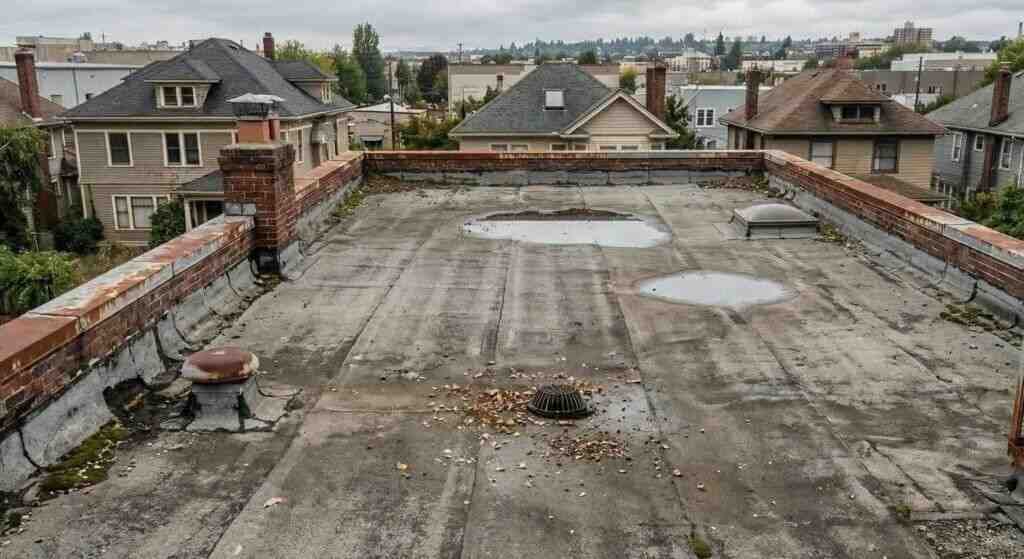
Hoboken’s dense building stock creates a specific roofing environment. Many roofs are flat or very low slope, so they move water toward drains and scuppers instead of quickly shedding it over eaves. If drainage slows, a shallow depression can hold water after a storm. That standing water adds stress to seams, flashing, and penetrations.
Parapet walls are another important local detail. The joint where the roof membrane turns up the parapet must remain watertight. Movement, age, failed sealant, deteriorated masonry, or damaged flashing can allow water into the wall-roof connection. A leak that begins at the perimeter can appear several feet inside the room below.
BlueSky’s Flat Roof Repair in Hoboken, NJ guide explains these local failure points in more depth. The purpose of this guide is to help homeowners recognize early signs, narrow down the source, and act before interior damage spreads.
7 Early Signs of a Roof Leak You Should Not Ignore
1. A ceiling stain that changes after rain
A yellow, tan, or brown ceiling stain is one of the clearest warning signs, especially if it darkens after rainfall. Take a photo and note the date. If it expands after the next storm, moisture is likely still entering.
2. Peeling or bubbling paint near the top floor
Moisture behind paint can cause bubbles, blistering, or peeling. In a Hoboken row house, pay attention to top-floor exterior walls and ceiling edges near parapets.
3. A musty smell after wet weather
Damp insulation or moisture trapped above a ceiling can create an odor before you see active dripping.
4. Dripping around a light fixture
Water near a ceiling light or electrical fixture is urgent. Do not touch the fixture or wet area. Shut off the affected circuit if it is safe to do so and call for professional help.
5. Damp spots near a chimney, roof hatch, or skylight
Any opening through the roof interrupts the waterproofing system. Flashing and seals around these penetrations can fail before the surrounding roof surface does.
6. Ponding water on a flat roof
Water remaining in the same areas long after rain has stopped can increase stress on aging membranes and seams. It does not automatically mean the roof is leaking, but it deserves attention.
7. A leak that keeps returning
Repeated repairs in the same area can mean the visible defect is not the true source, or the membrane has deteriorated beyond a sensible spot repair.

Roof Leak or Plumbing Leak? How to Tell
Not every ceiling stain is caused by the roof. Hoboken’s multi-story homes and converted buildings can also have plumbing, HVAC, or condensation problems.
Use timing as your first clue. If a stain grows after rain, start with the roof. If it appears after a shower, laundry cycle, or plumbing use on the floor above, investigate plumbing. If it shows up during humid weather without a clear connection to rain or water use, condensation or HVAC moisture may be involved.
Location matters too. A stain on the top-floor ceiling with only the roof above it is more likely to be roof-related. A stain below a bathroom or kitchen has more possible sources.
Do not paint over the stain before the source is solved. Fresh paint hides useful evidence while moisture may continue to move through the building.
How to Find a Roof Leak in Hoboken, NJ Step by Step
Step 1: Document when the leak appears
Take photos of stains, bubbling paint, and damp areas. Record whether the leak appeared during heavy rain, wind-driven rain, snowmelt, or a long period of lighter rain. A leak that only appears in wind-driven rain may point toward flashing, wall intersections, or a detail exposed to a particular direction of weather.
Step 2: Inspect the interior first
Start from the safest side of the problem. Check the top floor, roof-access area, ceiling void, or attic if your building has one. Look for darkened wood, damp insulation, rusty fasteners, water tracks, or soft finishes.
If water is near wiring or fixtures, keep your distance and address the electrical risk first.
Step 3: Trace the water path backward
The wet ceiling is the endpoint, not necessarily the entry point. Water can move laterally along decking, joists, insulation, and wall cavities. If you find a moisture trail on the underside of the roof deck, follow it toward its highest or most exterior point.
Step 4: Check the most common Hoboken flat-roof leak points
A professional inspection should include parapet base flashing, membrane seams and old patches, drains and scuppers, pipe penetrations, roof hatches, skylights, chimney flashing, rooftop deck supports, and areas where water ponds after rain.
Step 5: Check drainage before blaming the membrane
A blocked roof drain can create leakage even when much of the roof surface is intact. Water that cannot leave quickly can rise at walls, seams, and penetrations. Clear only visible debris that can be reached safely. Never climb onto a wet roof during a storm.
Step 6: Inspect flashing and transitions
Leak risk is concentrated where waterproofing changes direction or meets another material: walls, chimneys, vents, skylights, drains, and roof edges. A membrane can look acceptable across most of the roof while one failed detail allows repeated water intrusion.
Step 7: Get a professional diagnosis for hidden leaks
If the source is not obvious, a roofer can inspect the complete system and use controlled testing or moisture-detection methods when appropriate. The goal is to confirm the entry point before committing to a repair.
For local service, BlueSky’s Roof Leak Repair in Hudson County page covers Hoboken and surrounding Hudson County communities.

The Most Common Roof Leak Sources in Hoboken
Parapet wall flashing
The roof membrane must remain watertight where it turns upward at the parapet. Open terminations, deteriorated sealant, cracked masonry, or movement between materials can allow water behind the system.
Membrane seams
Flat-roof systems rely on seams or laps. Age, movement, prior repairs, and foot traffic can damage these joints.
Roof drains and scuppers
Dense urban roofs depend on reliable drainage. A partially blocked drain can increase ponding and push water toward vulnerable waterproofing details.
Roof penetrations
Vent pipes, exhausts, HVAC supports, antennas, and other penetrations require properly sealed flashing. Small gaps can create large interior stains.
Chimneys and masonry
Water near a chimney can come from failed roof flashing, deteriorated masonry, or crown problems. The inspection should include the roofing and adjacent masonry, not one in isolation.
Roof decks
Hoboken permits roof decks subject to local rules, and many properties use rooftop space. Deck supports, pavers, and foot traffic can complicate inspection or hide membrane damage. Drains must remain accessible.
What to Do Immediately If Water Is Coming Through the Ceiling
Move furniture, electronics, rugs, and valuables away from the area. Place containers under drips. If the ceiling is bulging or sagging, keep people away because waterlogged drywall or plaster can fail. If water is near electrical fixtures, outlets, or wiring, shut off the affected circuit from a dry, safe location if you can do so confidently.
Do not climb onto a wet roof during a storm. Temporary roof work in rain, wind, or darkness creates a serious fall hazard.
Professional emergency stabilization can protect the interior, identify the likely entry area, install temporary waterproofing where appropriate, and create a plan for permanent repair once conditions allow.
Fix the Leak at the Source, Not Where the Stain Appears
A lasting repair should answer two questions: Where did the water enter, and why did that detail fail?
If a seam separated, the repair should address the seam and evaluate the surrounding membrane. If parapet flashing opened, coating the roof several feet away will not solve the problem. If a roof drain caused water to back up, the drainage issue must be corrected as well as any damaged waterproofing.
Repeated layers of roof cement can temporarily change the path of water without eliminating the weakness. When the defect is localized and the rest of the roof remains serviceable, a targeted repair can be the right choice.
When a Roof Leak May Mean Replacement
Not every leak requires a new roof. Replacement becomes more reasonable when the roof has widespread deterioration, multiple wet areas, recurring leaks in different locations, extensive failed seams, compromised insulation, or a history of repairs that no longer hold.
Age alone does not decide it. An older membrane that is still sound and leaking at one isolated flashing detail may be repairable. A newer roof with poor installation or trapped moisture can need more extensive work.
If replacement is being considered, BlueSky’s Roof Replacement in Hudson County page explains the full process, including tear-off, decking inspection, waterproofing layers, flashing, and drainage. A professional should be able to show you why repair or replacement is recommended.
Do Roof Repairs in Hoboken Require a Permit?
This is a local detail generic roofing articles often miss. The City of Hoboken Construction Code Office says permits are generally required for regulated construction work and specifically identifies roofing among maintenance items that may require a permit. Projects can also require prior zoning, historic, or other approvals.
If your building is in a locally designated historic district or is a designated landmark, exterior work may also be subject to Historic Preservation Commission review depending on scope and visibility.
A small emergency stabilization and a larger reroofing project do not necessarily have the same requirements. Before substantial work begins, confirm the permit and approval requirements for your property.
How Much Does Roof Leak Repair Cost in Hoboken?
There is no reliable single price because the visible stain does not reveal the scope of the repair. A localized flashing correction costs less than opening a wet roof assembly, replacing insulation, repairing decking, and rebuilding a membrane section.
Access also matters in Hoboken. Tight lots, rooftop equipment, decks, neighboring structures, and the need to move materials through a building can affect labor.
BlueSky’s Hudson County roof leak repair page lists general county repair ranges, while the Hoboken flat roof guide discusses targeted flat-roof repair and replacement ranges. Treat those figures as planning ranges, not a quote. The real price depends on the confirmed source, roof system, access, and extent of moisture damage.
How to Prevent the Next Roof Leak
For Hoboken flat and low-slope roofs, prevention should focus on drainage and transitions. Check drains and scuppers regularly, especially after storms or rooftop work. Watch for new ponding, open seams, cracked sealant, and damage around penetrations. Keep rooftop decks and equipment arranged so they do not block drainage or make inspection impossible.
Have parapet flashing and masonry checked when cracks or deterioration appear. After an HVAC technician or another trade works on the roof, look for punctures, displaced flashing, or debris. Flat membranes can be damaged by foot traffic and tools without leaking immediately.
If your building has had recurring leaks, keep a roof history with dates, photos, repair locations, and invoices. That record can help distinguish a new issue from a recurring failure.
Frequently Asked Questions About Roof Leaks in Hoboken, NJ
Why does my roof only leak during heavy or wind-driven rain?
A leak that appears only in certain storms often points to flashing, a wall intersection, seam, penetration, or drainage problem that becomes vulnerable when rain is driven horizontally or water builds up.
Can a ceiling stain be from the roof even if it is dry now?
Yes. A stain can dry between storms while the roof defect remains. If it darkens or expands after rain, ongoing water intrusion is likely.
Where do flat roofs usually leak in Hoboken?
Common locations include parapet-wall flashing, membrane seams, roof drains or scuppers, penetrations, roof hatches, chimney flashing, and areas affected by ponding water.
Should I repair or replace a leaking flat roof?
Repair is usually worth considering when the defect is isolated and the surrounding roof remains in good condition. Replacement becomes more reasonable when the membrane is broadly deteriorated, insulation is wet, seams are failing in multiple areas, or repeated repairs keep failing.
Does Hoboken require permits for roofing work?
The City of Hoboken identifies roofing as work that may require construction permits, and some properties may also need zoning or historic approvals. Requirements depend on the project, so confirm them with the City before substantial work begins.
Need Roof Leak Repair in Hoboken, NJ?
A roof leak rarely improves on its own. The earlier the entry point is identified, the better the chance of limiting damage to ceilings, insulation, framing, and finished rooms.
If you are seeing a ceiling stain, peeling paint, damp odors, or active dripping after rain, BlueSky Roofing & Siding can inspect the roofing system and determine whether the problem calls for a targeted repair or a larger solution. Learn more about Roof Leak Repair in Hudson County, review the Flat Roof Repair in Hoboken guide, or call (201) 686-1059 for a free estimate.

