
If your gutters overflow every fall, fill with leaves a few weeks after cleaning, or send water over the edge during a hard New Jersey rain, it is natural to ask whether gutter guards will solve the problem. But gutter guards and gutter replacement solve two very different problems. Guards are designed to reduce the amount of debris entering a gutter that is already working correctly. Replacement is the better answer when the gutter system itself is failing – sagging, leaking, pulling away from the fascia, draining in the wrong direction, or simply too small for the roof and rainfall it needs to handle.
That distinction matters in Princeton. The municipality continues to invest in protecting and expanding its tree canopy, and many local homes sit beneath mature deciduous trees that can drop leaves, seed pods, small twigs, and organic debris onto the roof throughout the year. Add New Jersey’s heavy rain, freeze-thaw cycles, winter snow, and summer thunderstorms, and the gutter system has a demanding job: collect roof runoff quickly, move it to properly placed downspouts, and discharge it away from siding, masonry, walkways, and the foundation.
For Princeton and Mercer County homeowners, the most useful question is not simply, “Are gutter guards worth it?” It is: “Is my existing gutter system healthy enough to protect, or is it already time to replace it?” This guide explains how to make that decision and what to look for before spending money. If you want a professional evaluation, BlueSky’s gutter services can include inspection of gutters, downspouts, fascia, and roof-edge drainage.
Quick answer: Choose gutter guards when your gutters are structurally sound, correctly pitched, securely attached, properly sized, and draining well – but require frequent cleaning because of tree debris. Choose gutter replacement when the system leaks, sags, separates, overflows despite being clean, has persistent standing water, damaged sections, failing fasteners, or inadequate capacity. In many Princeton homes, the best long-term project is new seamless gutters with a compatible guard system installed at the same time.
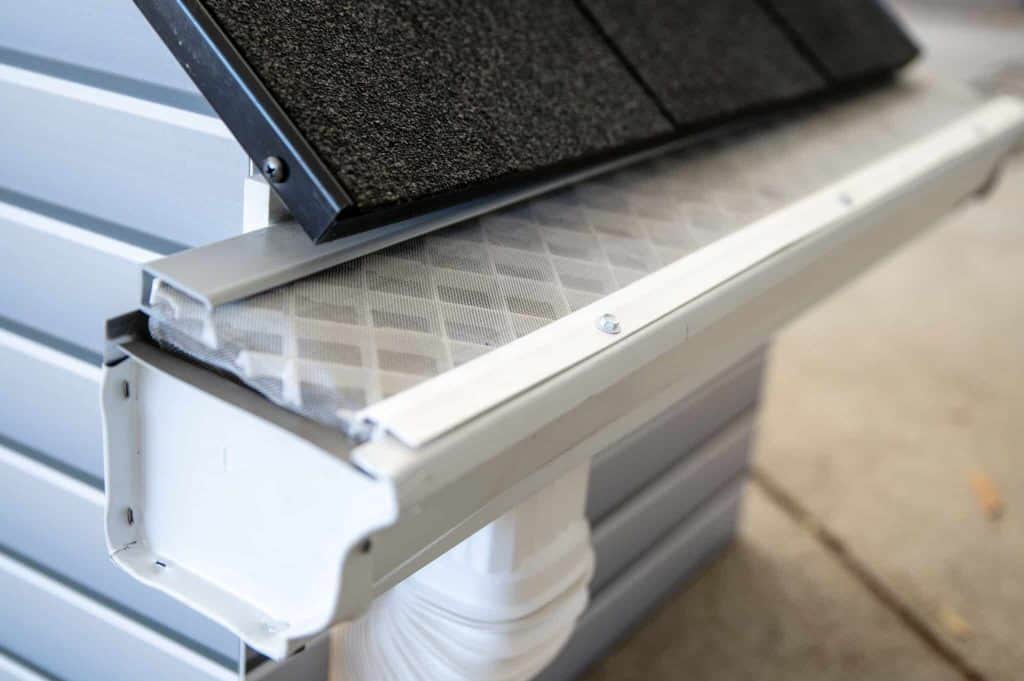
Gutter Guards and Gutter Replacement Are Not Interchangeable
A gutter guard is a cover, screen, mesh, hood, or similar protection installed over or within the top of a gutter. Its purpose is to reduce how much debris reaches the trough while still allowing rainwater to enter. A guard can lower cleaning frequency and can be particularly useful where mature trees overhang the roof. What it cannot do is restore proper pitch, repair corroded metal, reattach a gutter that is pulling away from rotted fascia, enlarge an undersized drainage system, or fix a downspout layout that sends water to the wrong place.
Gutter replacement addresses the drainage system itself. Old sections are removed and new gutters are sized, pitched, fastened, and connected to downspouts based on the roofline and the property. For many homes, seamless aluminum is a practical replacement option because long continuous runs reduce the number of field seams that can become leak points. BlueSky currently publishes a typical gutter-installation reference of about $8-$14 per linear foot on one of its New Jersey county service pages, with actual pricing dependent on the property, system size, access, and project scope. A Princeton estimate should always be based on an on-site inspection rather than a statewide average.
When Gutter Guards Make Sense for a Princeton Home
Gutter guards make the most sense when the underlying gutter system passes a basic health check. Think of guards as a maintenance upgrade, not a structural repair. If the gutters already move water correctly and the main frustration is frequent debris accumulation, guards can be a sensible next step.
Signs your existing gutters may be good candidates for guards
- The gutters stay straight and tight against the fascia with no visible sagging or separation.
- Water flows toward the downspouts instead of sitting in low spots after a storm.
- There are no recurring leaks at corners, end caps, seams, or outlet connections.
- The fascia and roof edge are solid, dry, and able to hold new fasteners where needed.
- Overflow mainly happens when leaves or debris block the trough or downspout – not when the system is freshly cleaned.
- Downspouts are large enough, open, securely connected, and discharge runoff away from the home.
- The gutter size is appropriate for the roof area and the amount of water reaching each run.
For a tree-heavy property, a properly selected guard can reduce the number of full gutter cleanings needed each year. That does not mean maintenance disappears. Fine particles, roof granules, pine needles, pollen, and decomposed organic material can still accumulate. Debris can also sit on top of certain guard styles and reduce water entry if it is never brushed or blown off. A good installer should explain what maintenance the specific system still requires rather than promising a permanently maintenance-free gutter.
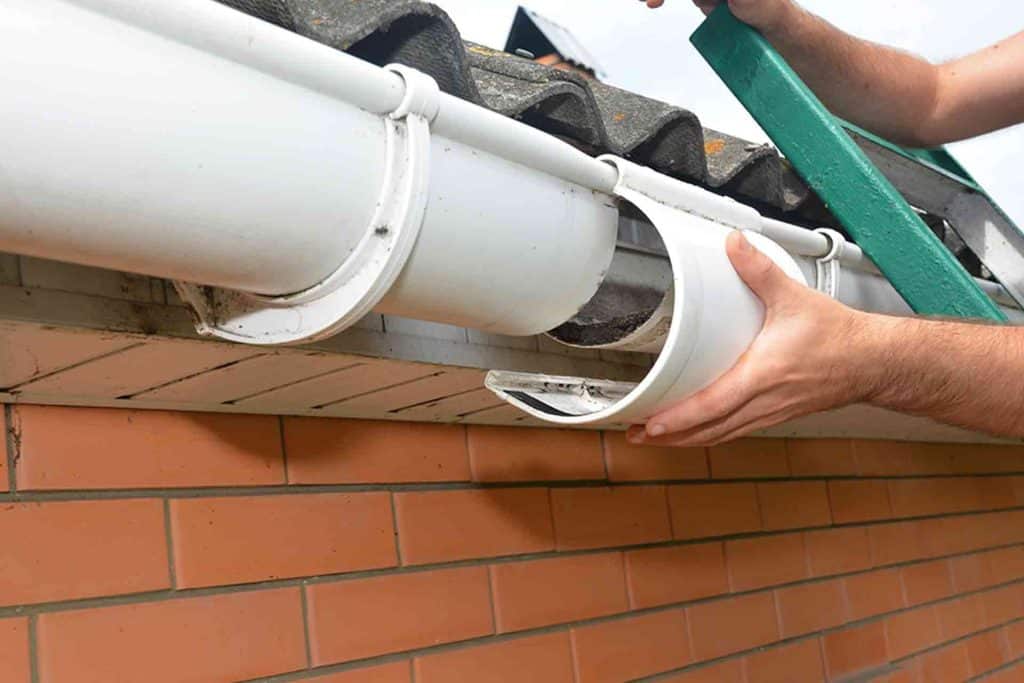
When Gutter Replacement Is the Better Investment
If the gutters are already failing, adding guards can hide the symptoms without solving the cause. It may even make future repair more inconvenient because the guard system has to be removed to access the gutter. Replacement is usually the more rational investment when multiple defects are present or when the system has reached the end of its practical service life.
1. The gutters sag or hold standing water
Gutters need a controlled slope toward each outlet. If hangers have loosened, long runs have deformed, or the original pitch was poor, water may sit in the trough long after a storm. That standing water adds weight, accelerates deterioration, and can freeze in winter. A guard does not correct pitch. The gutter needs to be re-pitched, repaired, or replaced.
2. Gutters are pulling away from the fascia
A visible gap between the back of the gutter and the fascia is a warning sign. Loose fasteners may be part of the problem, but the wood behind them can also be deteriorated from years of overflow or roof-edge leakage. Before installing guards, the fascia should be checked. New gutters should never be attached over hidden rot and expected to remain secure.
3. Water leaks from several seams or corners
One leaking end cap or corner can sometimes be repaired. Repeated leakage across several joints suggests a system with widespread wear, movement, or aging sealant. If the existing gutters are sectional and have many seams, replacing them with properly fabricated seamless runs can reduce future joint-related leak points.
4. Clean gutters still overflow during heavy rain
Overflow is not always a clogging problem. If clean gutters cannot keep up with roof runoff, the system may have insufficient capacity, too few outlets, small downspouts, poor pitch, or a roof valley that concentrates a large amount of water into a short section. Installing a guard without solving the hydraulic problem can make overflow worse if the guard slows water entry at the exact point where flow is already concentrated.
5. You see rust, cracks, holes, crushed sections, or repeated patchwork
Local repairs are reasonable when damage is isolated. But once multiple sections have been patched, bent, corroded, or punctured, the cost of repeatedly repairing an aging system can approach the value of replacement without delivering the same reliability or appearance.
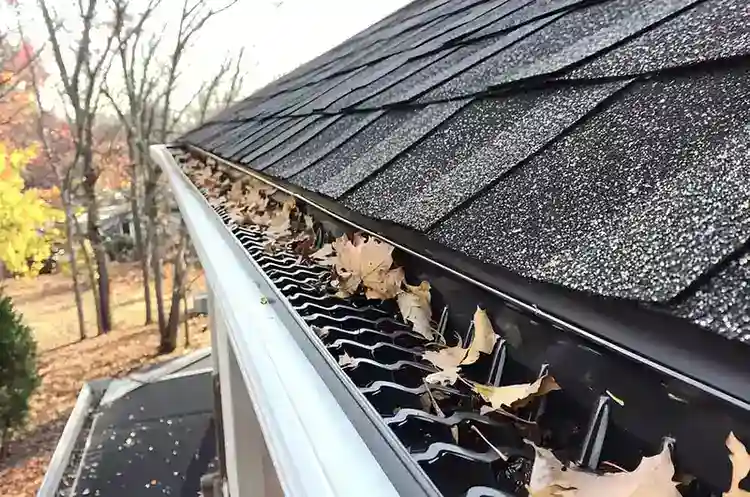
Why Princeton’s Tree Canopy Changes the Gutter-Guard Conversation
Princeton is not a low-debris environment. In December 2025, Princeton Council approved a 2025-2029 Community Forestry Management Plan and updated tree-removal rules aimed at strengthening the community’s tree canopy. For homeowners, that is a useful reminder that mature trees are part of the local landscape – and roof drainage needs to be designed and maintained with that reality in mind.
Different trees create different gutter problems. Broad leaves can cover an open trough quickly. Small leaves and seeds can pass through large screens. Pine needles can bridge across openings or lodge in mesh. Twigs can catch other debris and create a dam. Spring pollen and roof granules can combine into a dense layer of sediment at the bottom of a gutter even when large leaves are kept out. This is why the best guard is not automatically the one with the smallest opening; it is the system that matches the surrounding debris, roof pitch, rainfall intensity, gutter size, and maintenance expectations.
Princeton also maintains active stormwater regulations and emphasizes stormwater management. At the house level, gutters and downspouts are a first line of water control: they need to move runoff away from vulnerable exterior surfaces and the foundation rather than simply shifting overflow from the roof edge to another problem area. Homeowners planning larger exterior changes can review the municipality’s stormwater information when relevant to their project.
What Type of Gutter Guard Works Best?
There is no universal best gutter guard for every Princeton property. The correct choice depends on debris type, roof geometry, gutter condition, budget, and how much periodic maintenance you are willing to perform. The installer also needs to confirm that the guard does not interfere with the roof edge, drip edge, shingle system, or water entry during intense rain.
| Guard type | Main strength | Watch for | Best fit |
| Micro-mesh | Blocks many small particles and leaves | Fine debris can collect on top; quality and installation matter | Homes with mixed leaf and small-debris loads |
| Perforated metal | Durable and relatively open for rainfall | Small debris may still pass through | Properties dominated by larger leaves |
| Screen | Simple and often lower cost | Can admit seeds, needles, and small debris; screens may deform | Lower-debris areas or budget-conscious retrofits |
| Surface-tension / hood | Moves water around a curved surface into the gutter | Performance depends heavily on roof flow and installation; debris may collect at the edge | Specific roof/gutter configurations after inspection |
The 7-Point Inspection to Do Before Buying Gutter Guards
A guard quote should start with an inspection of the existing drainage system. Otherwise, you may be paying to protect gutters that should have been replaced first. A contractor should evaluate at least the following seven items:
1. Gutter alignment and pitch: confirm each run drains toward the correct outlet and does not contain low spots.
2. Fasteners and hangers: check spacing, tightness, corrosion, and whether the fascia provides sound attachment points.
3. Fascia and roof edge: look for rot, peeling paint, staining, softness, or evidence of water getting behind the gutter.
4. Gutter capacity: evaluate the roof area, roof pitch, valleys, and concentrated runoff locations that may overwhelm a small trough.
5. Downspouts and outlets: verify that outlets are not undersized or restricted and that downspouts have enough capacity for the connected roof area.
6. Discharge location: confirm water exits far enough from the home and does not immediately pool near the foundation, walkway, or basement wall.
7. Roof and flashing conditions: determine whether water at the eave is actually a gutter problem or part of a larger roof-leak or drip-edge issue.
That last point is important. Water behind a gutter may come from overflow, but it can also be connected to roof-edge details or another leak source. BlueSky’s roof leak repair service is a useful internal resource when the drainage problem appears to involve the roof system rather than the gutter alone.
Gutter Guards vs. Gutter Replacement: Side-by-Side
| Question | Gutter guards | Gutter replacement |
| Primary purpose | Reduce debris entering a healthy gutter | Restore or redesign the drainage system |
| Best for | Frequent leaf/debris cleaning with otherwise good drainage | Sagging, leaks, poor pitch, damage, undersizing, failing fasteners |
| Fixes standing water? | No | Yes, when the new system is correctly pitched and designed |
| Fixes rotted fascia? | No | Fascia can be repaired before new gutters are installed |
| Reduces cleaning? | Usually, but does not eliminate maintenance | Not by itself; guards can be added to the new system |
| Best long-term option for old failing gutters | Usually no | Yes; guards may be added after or during replacement |
What Should Princeton Homeowners Budget For?
A precise gutter project price cannot be determined from the home’s square footage alone. Gutters are commonly measured by linear footage, but the final estimate also depends on stories, access, roof height, number of corners, gutter size, downspout quantity, fascia repairs, removal of the old system, guard type, and whether difficult rooflines require custom transitions.
As a company-published New Jersey reference, BlueSky lists seamless gutter installation at approximately $8-$14 per linear foot on its Bergen County page. That number should be treated as a planning reference, not a Princeton quote. Material and labor requirements can differ substantially from one property to another. Gutter guards are an additional cost whose installed price varies widely by product and attachment method, so homeowners should compare the total installed system rather than only a per-foot advertisement.
When comparing estimates, ask whether the price includes removal and disposal of old gutters, new hidden hangers, downspouts, outlets, elbows, end caps, corners, sealants, fascia repair allowances, splash blocks or extensions, guard installation, cleanup, and warranty terms. A cheaper quote can become more expensive if important drainage components are treated as add-ons later.

When Replacing the Gutters and Adding Guards Together Makes Sense
Homeowners sometimes frame the decision as guards or replacement when the best answer is both. If the existing gutters are old or poorly designed and the property also has a heavy debris load, a new system can solve the drainage defects while the guard reduces future cleaning. Installing the two together can also allow the guard to be matched to the exact gutter profile and fastener layout instead of retrofitting a product onto an unknown or weakened system.
A combined project is particularly worth considering when you are already replacing a roof. Roof-edge details, drip edge, fascia, gutters, and downspouts all interact. Coordinating the work can prevent a new gutter from being mounted in a way that conflicts with the roofing system, and it gives the contractor an opportunity to correct hidden fascia damage before everything is closed up.
Do Not Ignore Downspouts: They Decide Where the Water Goes
The gutter trough gets most of the attention, but a drainage system is only as effective as its outlets and downspouts. A perfectly clean gutter can still overflow if too much water is being forced through a small or clogged outlet. Likewise, a new gutter can protect the roof edge but still contribute to basement or foundation moisture if the downspout dumps water directly beside the house.
- Confirm every downspout is open from the outlet through the final elbow.
- Watch where water exits during a real rain, not only during a dry inspection.
- Make sure extensions or underground drainage connections are not disconnected or blocked.
- Check whether roof valleys send concentrated flow past a guard or over the front edge.
- Look for soil erosion, splash marks, foundation staining, or pooling near discharge points.
If the home has recurring water issues, the right solution may involve gutter capacity, additional downspouts, changed discharge locations, or site drainage – not simply a different guard.
What About Historic or Architecturally Sensitive Princeton Homes?
Princeton has locally designated historic districts and an Office of Historic Preservation that reviews proposed changes affecting historic buildings, neighborhoods, and streetscapes. Gutter work is usually functional, but visible exterior alterations on a regulated property may deserve an extra check before materials, profiles, colors, or related trim are changed.
If your property is in a historic district or has special architectural features, verify requirements with Princeton’s Office of Historic Preservation before approving a design that substantially changes the exterior appearance. The practical goal is to improve drainage without compromising details that matter to the building’s character or creating avoidable approval problems.
Gutter Guards Reduce Maintenance – They Do Not Eliminate It
Any contractor promising that a gutter guard means you will never inspect or clean the system again is overselling the product. Guards reduce the amount and size of debris entering the gutter, but the roof and drainage system still need periodic attention. Princeton’s tree cover makes that especially important after fall leaf drop, spring seed and pollen cycles, and major wind events.
After guards are installed, inspect the roof edge from the ground during heavy rain. Look for water shooting over the front, spilling behind the gutter, or bypassing the guard at roof valleys. Periodically remove material that rests on top of the guard and check that downspouts remain open. After major storms, look for branches or impact damage. If you are not comfortable working at height, use a professional service rather than climbing onto the roof or leaning from a ladder.
A Simple Decision Guide for Mercer County Homeowners
1. Start with a full cleaning. If the gutter is blocked, you cannot accurately judge its capacity or pitch.
2. Observe the system during rain. If a clean gutter drains correctly and the only recurring issue is debris, consider guards.
3. Check the fascia and fasteners. If the gutter is loose or the wood is damaged, repair the substrate before adding anything on top.
4. Look for standing water. Persistent puddling means pitch or deformation needs to be corrected.
5. Assess overflow points. Overflow at a roof valley may require greater capacity, a different guard design, or a drainage modification.
6. Compare the age and condition of the whole system. Multiple repairs across several runs usually favor replacement over another patch.
7. If replacing, decide whether adding guards now will reduce future maintenance enough to justify the additional investment on your specific property.
Common Mistakes to Avoid When Comparing Gutter Quotes
Choosing a guard based only on the sales demonstration
A small sample with water poured over it does not reproduce a Princeton thunderstorm, a steep roof, a high-volume valley, or a layer of wet leaves. Ask how the product performs with your roof pitch and debris type, and whether the installer will adjust problem areas rather than use the same detail everywhere.
Installing guards over dirty, mis-pitched, or damaged gutters
The system should be cleaned and inspected first. Covering an existing problem makes diagnosis harder and can leave you paying twice when the gutters need replacement shortly afterward.
Ignoring fascia damage
Fasteners need solid material. If years of overflow have softened the fascia, simply adding more screws is not a durable repair. The damaged wood should be addressed before a replacement gutter or guard system is installed.
Comparing only price per foot
Linear-foot pricing is useful, but it does not tell you whether two contractors are proposing the same gutter size, metal thickness, hanger spacing, downspout configuration, guard product, disposal, fascia work, or warranty. Compare scope against scope.
What BlueSky Should Inspect Before Recommending Guards or Replacement
BlueSky Roofing & Siding Solutions is a family-owned New Jersey exterior contractor that states it has more than 45 years of experience and is licensed and insured in New Jersey. For a gutter consultation, the most valuable service is not automatically selling a new product – it is determining where the water-management system is failing and recommending the smallest scope that reliably fixes it. You can view examples of exterior work in the project gallery and read verified customer feedback on the reviews page.
A proper inspection should cover the full roof edge, gutters, downspouts, fascia, visible soffit conditions, discharge points, and high-flow areas such as valleys. If the gutters are healthy, the recommendation may be cleaning plus guards. If the drainage system is failing, the estimate should explain why replacement is the stronger long-term option and which related repairs are necessary before installation.
Frequently Asked Questions About Gutter Guards and Replacement in Princeton, NJ
Are gutter guards worth it in Princeton, NJ?
They can be, especially on properties with mature trees and frequent leaf or seed debris. They are most worthwhile when the existing gutters are already in good structural condition and drain correctly. Guards should be viewed as a maintenance-reduction system, not a repair for failing gutters.
Should I replace old gutters before installing gutter guards?
If the gutters sag, leak in multiple locations, pull away from the fascia, hold standing water, or overflow even when clean, replacement should be evaluated first. Installing a premium guard on a weak gutter often leads to paying for removal and reinstallation later.
Can gutter guards cause water to overflow?
Any guard can overflow if rainfall reaches the roof edge faster than the product can accept water, especially at steep roof sections and valleys. Clogged guard surfaces, poor installation, undersized gutters, and limited downspout capacity can also contribute. The whole drainage system should be evaluated.
Do gutter guards mean I never have to clean the gutters again?
No. They usually reduce cleaning frequency, but leaves can collect on top, fine debris can enter, and downspouts still need to remain open. Periodic inspection is part of responsible maintenance.
What are the signs I need new gutters instead of a repair?
Multiple leaking sections, recurring sagging, widespread corrosion, gutters separating from the fascia, persistent standing water, damaged fascia, or repeated overflow with a clean trough are strong signs that replacement may be more cost-effective than continued patching.
How much does gutter replacement cost in Princeton?
Final pricing depends on linear footage, gutter size, stories, access, corners, downspouts, fascia condition, and project complexity. BlueSky publishes an approximate $8-$14 per-linear-foot gutter-installation reference on one New Jersey county page, but a Princeton property should receive an on-site, itemized estimate.
Can I install gutter guards when I replace my roof?
Yes, and coordinating the work can be beneficial because the roofer can inspect fascia, drip edge, roof-edge conditions, and drainage details before the new gutter and guard system is finalized.
Do historic Princeton homes need special gutter considerations?
Potentially. Older or historically regulated properties may have distinctive fascia, cornices, copper work, half-round gutters, or exterior-design requirements. If the property is in a locally designated historic district, verify applicable review requirements before making visible exterior alterations.
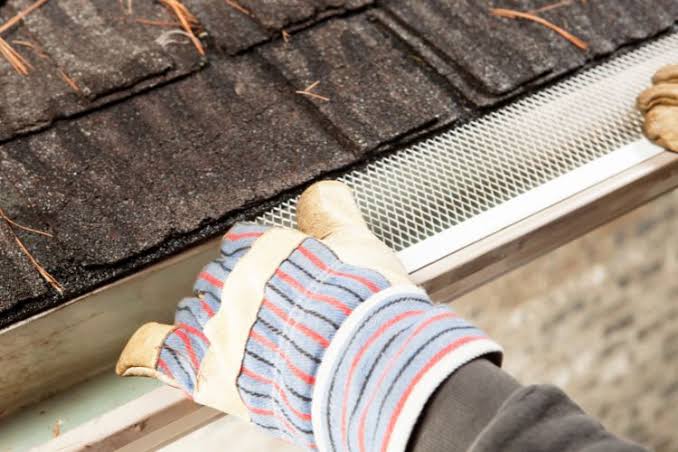
Get an Honest Gutter Evaluation in Princeton, NJ
The right solution depends on what your gutters are doing today. If they are straight, secure, correctly pitched, and simply overwhelmed by leaves, gutter guards may be a smart maintenance upgrade. If they are sagging, leaking, undersized, or attached to damaged fascia, replacement is the more important investment. And when both age and debris are problems, new seamless gutters with a compatible protection system can address both needs in one project.
BlueSky Roofing & Siding Solutions offers free estimates and exterior inspections. To discuss gutter guards, gutter replacement, downspouts, fascia concerns, or roof-edge drainage at a Princeton-area property, call (201) 686-1059 or request a free estimate online.

