
| Quick Answer: Most flat roof leaks in Hoboken originate at three points: the parapet wall flashing, the roof drain or scupper, or membrane seams that have separated over time. These are different failure points from what you read about in generic roofing articles because Hoboken’s flat roofs on brownstones and row homes operate in a specific environment. A targeted repair on a membrane that still has useful life left typically costs $500 to $2,500. A full membrane replacement runs $8,000 to $18,000 for a typical Hoboken rowhouse rooftop. |
Flat roofs are not a suburban roofing problem. They are Hoboken’s roofing reality. The overwhelming majority of residential rooftops in Hoboken are flat or near-flat, covering the brownstones and row homes that define the city’s Mile Square footprint. When one of them leaks, you need a contractor who actually works on flat roofs in dense urban environments, not someone whose experience is entirely with pitched suburban colonials.
This guide covers what actually causes flat roof failures in Hoboken specifically, how to identify what is happening on your roof, and what your repair or replacement options look like.
Why Flat Roofs in Hoboken Fail Where They Do
Parapet Wall Flashing – The Number One Source of Hoboken Leaks
The parapet is the low wall that runs around the perimeter of most Hoboken flat roofs. Where the roof membrane meets the parapet wall, there is a flashing detail called the base flashing that seals this junction. This is the most common point of failure on Hoboken residential flat roofs.
Why? Because the parapet wall and the roof membrane expand and contract at different rates with temperature changes. Over years, the base flashing at this junction is constantly being stressed. It eventually separates, cracks, or pulls away from the wall. Water runs through the gap and enters the building at the perimeter. The stain you see inside may be anywhere along that perimeter because water travels horizontally before it drips.
Membrane Seams
Flat roofs in Hoboken are typically covered in EPDM rubber membrane, TPO single-ply membrane, or modified bitumen. All three systems have seams where membrane panels join. These seams are the weakest points in any flat roofing system. On older installations, seam adhesive breaks down over time. On improperly installed systems, seams may never have been fully bonded. Water finds seams reliably over time.
Roof Drains and Scuppers
Flat roofs rely on drains or scuppers to remove water because there is no pitch to shed it naturally. When a drain becomes partially blocked by debris, water ponds on the roof surface. Standing water accelerates membrane degradation. Over time, the area around a partially blocked drain develops a depression where water constantly pools. Even small areas of consistent ponding significantly shorten membrane life.
Scuppers, the openings through the parapet wall that allow water to drain off the roof edge, can also fail at their flashing detail. When the scupper flashing separates, water enters the wall assembly rather than exiting through the opening.
Penetrations – HVAC Units, Pipes, Conduit
Hoboken rooftops have more penetrations per square foot than suburban pitched roofs. HVAC units, plumbing vents, electrical conduit, and satellite or antenna mounts all create penetration points that require their own flashing details. Each penetration is a potential failure point. On older systems, the pitch pockets or pipe boots around these penetrations deteriorate. We find failed penetration flashings on Hoboken roofs regularly.
EPDM vs TPO vs Modified Bitumen – What Is on Your Hoboken Roof
EPDM Rubber Membrane
EPDM is a black rubber membrane that has been the standard for flat residential roofs in the Northeast for decades. It is durable, UV resistant, and handles the temperature swings of NJ winters well. EPDM seams are bonded with adhesive or tape. Properly installed EPDM has a lifespan of 20 to 30 years. Signs of end-of-life EPDM include surface cracking, seam separation, and shrinkage that pulls the membrane away from parapets.
TPO Single-Ply Membrane
TPO is a white thermoplastic membrane that has grown in popularity because of its energy efficiency. The white surface reflects solar heat and reduces cooling loads. TPO seams are heat-welded, creating stronger bonds than adhesive-joined EPDM. A properly installed TPO system lasts 20 to 30 years. TPO is our most common recommendation for Hoboken roof replacements.
Modified Bitumen
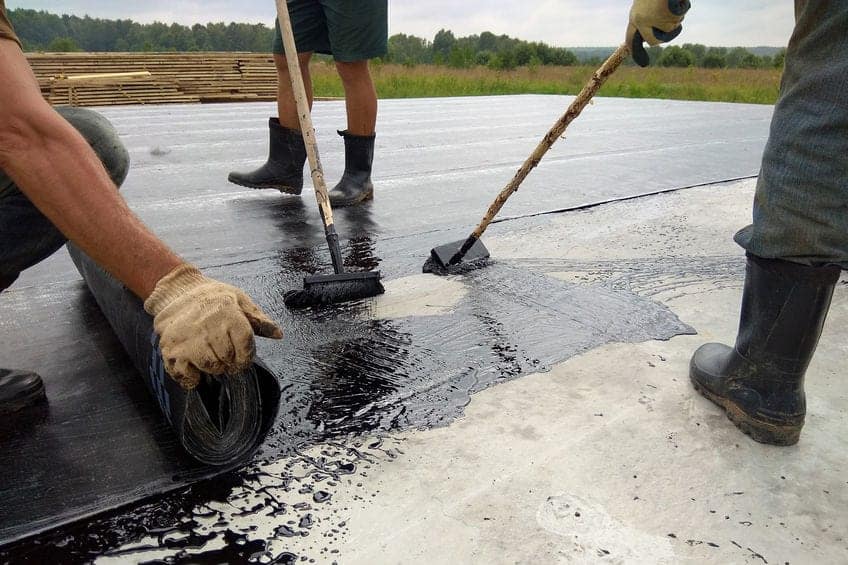
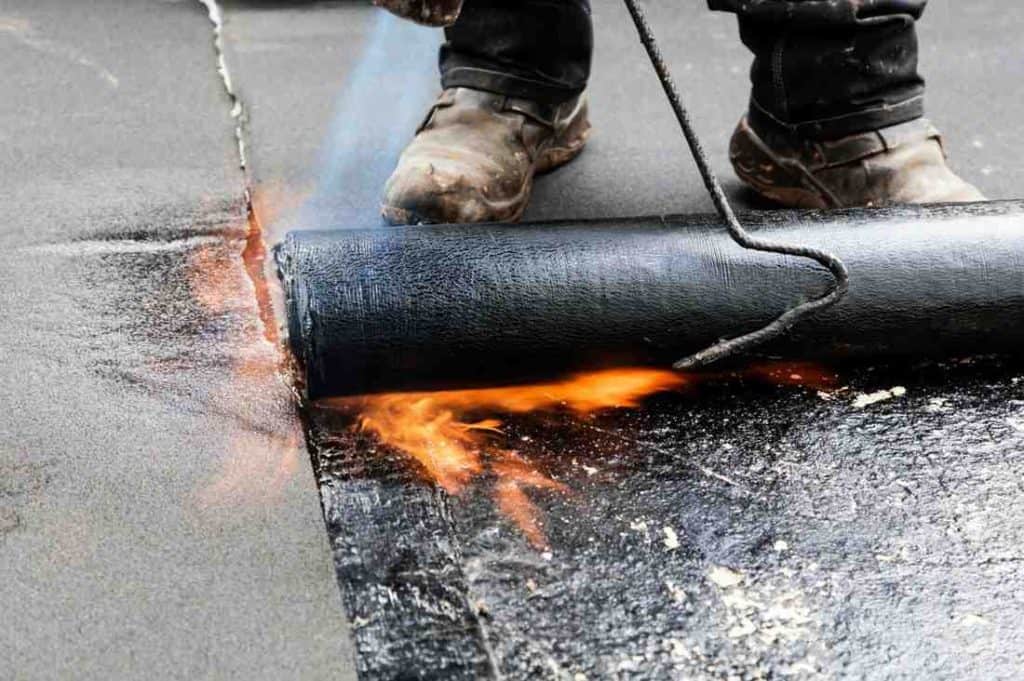
Modified bitumen is an asphalt-based system applied in multiple layers, typically with a torch-applied or cold-adhesive base sheet topped with a granule-surfaced cap sheet. Many older Hoboken buildings have modified bitumen roofs. When maintained properly it is a durable system, but it is more susceptible to surface damage from foot traffic and UV degradation over time than EPDM or TPO.
Repair or Replace – How to Make the Call on Your Hoboken Flat Roof
This is the most important decision for Hoboken homeowners dealing with a leaking flat roof. Here is how we think through it:
Repair Is Right When:
- The membrane is less than 15 years old and the bulk of it is in good condition
- The failure is isolated to a specific point such as a failed seam, a penetration flashing, or a section of parapet base flashing
- The insulation beneath the membrane is dry, confirmed by moisture testing or core sampling
- There is no ponding water issue that will continue to damage a repaired section
Replacement Is Right When:
- The membrane is 20 or more years old and showing widespread surface degradation
- You have had the same area repaired more than twice and it continues to fail
- Moisture testing reveals wet insulation in multiple areas beneath the membrane
- The insulation is compressed and no longer providing its rated R-value
- The roof deck beneath shows deterioration in multiple locations
| Pro Tip from Our CrewsThe most expensive mistake Hoboken homeowners make with flat roofs is doing a third or fourth repair on a membrane that has already reached end of life. Each repair adds cost without solving the underlying problem. If your flat roof has been repaired more than twice in the same general area, let us give you an honest assessment of whether the membrane has more useful life in it or whether replacement is the better financial decision. |
What Flat Roof Work Costs in Hoboken NJ
| Scope | Typical Range | Notes |
| Seam repair (per repair) | $300 – $600 | Clean, adhesive, seal |
| Parapet base flashing repair | $500 – $1,500 | Depends on linear footage |
| Penetration flashing replacement | $200 – $500 each | Per pipe boot or HVAC curb |
| Full EPDM replacement (per square) | $350 – $550 | Installed over existing insulation |
| Full TPO replacement (per square) | $400 – $650 | Including new insulation board |
| Drain and scupper repair | $300 – $800 | Flashing and clamping ring |
Hoboken’s access constraints, building heights, and dense lot lines affect labor costs. Some Hoboken rooftop projects require rooftop hoisting of materials because truck access to the rear of the building is not possible. This is factored into estimates for specific addresses.
The Access Reality of Working in Hoboken
Hoboken is not a suburban job site. Tight streets, parking restrictions, and narrow alleyways between buildings require planning that suburban contractors may not have experience with. Permit parking holds for material staging, coordinating with neighboring buildings for equipment access, and understanding which blocks have loading restrictions on which days all factor into how a Hoboken roofing job gets executed.
We have worked in Hoboken and throughout Hudson County regularly. We know how to plan a Hoboken job. When getting estimates for flat roof work in Hoboken, ask the contractor specifically how they plan to stage materials and what their access approach is for your address.
Frequently Asked Questions – Flat Roof Repair in Hoboken
How do I know if my flat roof is leaking or if the water is coming from somewhere else?
Flat roof leaks are frequently misdiagnosed because water travels horizontally on flat surfaces and through wall cavities before it drips down. A water stain on a top-floor wall might originate from the roof, from a window flashing, or from a parapet that is not waterproofed. We do moisture mapping inspections that identify the actual source before any work begins.
Can I put TPO over my existing modified bitumen roof?
Sometimes yes, depending on the condition of the existing surface and the number of existing layers. NJ code limits flat roof systems to specific layering. We assess this during the inspection and will tell you whether a recover or a full tear-off is appropriate for your specific roof.
My downstairs neighbor is complaining about water. Is that my roof?
In Hoboken’s attached row homes this situation is common. The investigation needs to rule out plumbing, window flashing, and parapet penetrations as well as the roof membrane. We approach these inspections systematically because blaming the roof first is often wrong in attached urban buildings.
Does Hoboken require a permit for flat roof replacement?
Yes. A permit is required for full membrane replacement in Hoboken. We handle the permit application. For repairs, requirements vary by scope. We will advise you on permit requirements for your specific project during the estimate.
| Get Your Free Estimate Call or text: (201) 686-1059 Online: blueskyroofingsiding.com/roofing/ Free inspections. No pressure. No obligation. Licensed and insured NJ contractor. |
| Related Pages on BlueSky Roofing & Siding:Roofing Services NJ Hudson County Roofing Services Emergency Roofing 24/7 Roof Leak Repair NJ |

